
Eye Conditions
Blepharitis: UK causes, symptoms and treatment
Struggling with sore, gritty or irritated eyes? Speak to Ms Pearsall's team — free, no obligation.
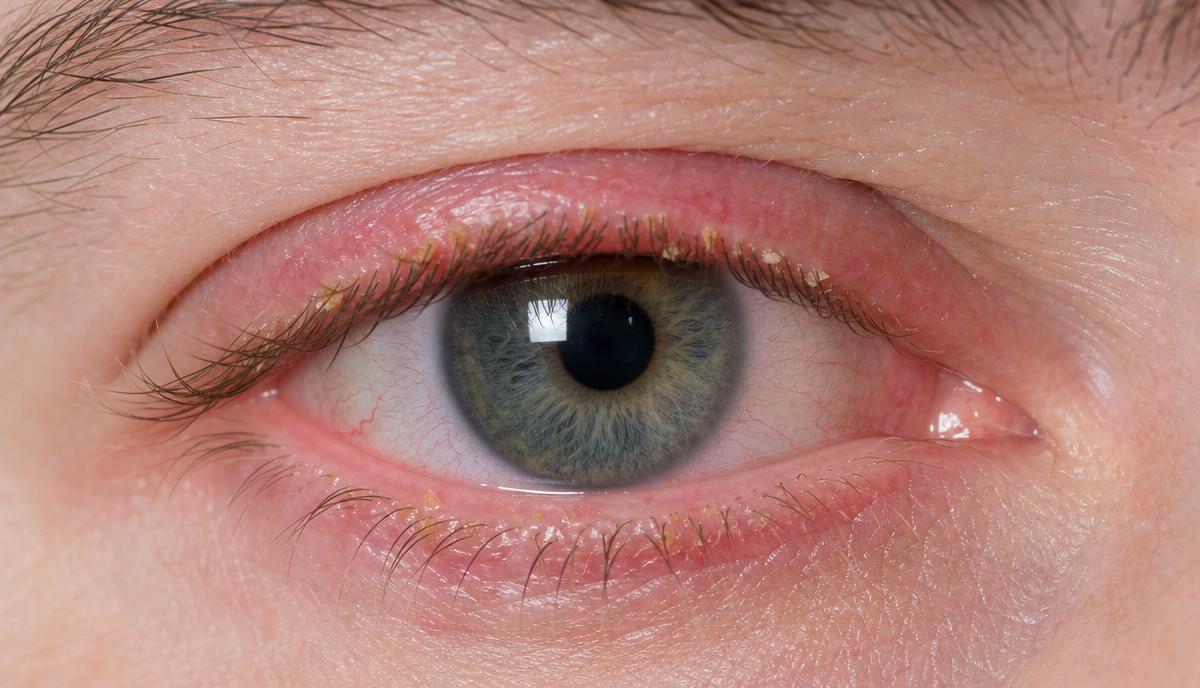
Blepharitis is chronic inflammation of the eyelid margins. It is the single commonest reason UK patients see me for gritty, red, watery or crusty eyes, and although it cannot be cured it can be very effectively controlled with a daily routine.
What causes blepharitis?
Two overlapping problems cause almost all blepharitis:
- Anterior blepharitis — bacterial or seborrhoeic inflammation of the lash line, producing dandruff-like scales and cylindrical collarettes around the lashes.
- Posterior blepharitis / meibomian gland dysfunction (MGD) — blockage of the oil glands running through the eyelids that keep the tear film stable. Without their oil the tears evaporate too quickly and the eye surface becomes irritated.
Skin conditions (rosacea, seborrhoeic dermatitis), Demodex mites, and heavy eye make-up all contribute.
Symptoms
Typical symptoms include:
- Gritty or foreign-body sensation, worse in the morning
- Red, sore lid margins
- Crusting or 'glued' lashes on waking
- Recurrent styes and chalazia
- Watery eyes (see our guide to watery eyes and epiphora)
- Blurred vision that clears with a blink
- Contact lens intolerance
The daily routine that works
This three-step routine, done twice a day for the first fortnight and then daily, controls almost all cases:
1. Warm compress — a microwaveable eye mask heated to a comfortable temperature and worn over closed eyes for 8–10 minutes. This softens the meibomian oil.
2. Lid massage — gently sweep from lid margin outwards with a clean fingertip to express the softened oil.
3. Lid hygiene — clean the lash line with a proprietary lid-care wipe or a diluted lid-cleaning foam. Cooled boiled water on cotton wool is a reasonable substitute.
Add preservative-free lubricating drops through the day and remove all eye make-up before bed.
When drops or antibiotics are needed
Cases that do not settle with the daily routine may need:
- A course of topical antibiotic ointment (chloramphenicol or fusidic acid) applied at bedtime
- Oral doxycycline or erythromycin for rosacea-related MGD (usually 6–12 weeks)
- Prescription anti-inflammatory drops (ciclosporin, lifitegrast) for stubborn evaporative dry eye
- In-office intense pulsed light (IPL) or LipiFlow treatments for severe MGD
Will blepharitis affect my cataract or laser surgery?
Yes — uncontrolled blepharitis increases the risk of infection after cataract surgery and worsens dry eye after laser. I always treat blepharitis for two to six weeks before any refractive procedure. See cataract surgery recovery timeline for more.
When to see a specialist
Book a consultation if:
- The routine has been done properly for six weeks with no improvement
- Vision blurs and does not clear with blinking
- You get frequent styes or chalazia
- You have unilateral persistent lid swelling or a growing lump (needs biopsy to exclude malignancy)
You can book a consultation or call 020 3137 3237.
Frequently asked questions
- Can blepharitis be cured?
- No, but it can be controlled. Most patients find a five-minute daily routine keeps them symptom-free indefinitely.
- Is blepharitis contagious?
- No. It is a chronic inflammatory condition of the lid margins, not an infection you can pass on.
- Do warm compresses actually help?
- Yes — heat softens the thickened meibomian oil so it can flow again, which is the core problem in the commonest form of blepharitis.
- Do I need to stop wearing eye make-up?
- Not permanently, but avoid waterproof mascara and eyeliner on the waterline, and remove all make-up thoroughly at night.
Explore more on Eye Conditions
Related reading
Medical ophthalmology — consultant diagnosis & second opinions- My distance vision is good but I need glasses for reading — what should I do?
If your distance sight is still clear but reading is becoming a struggle, presbyopia is the most likely cause. Ms Tahmina Pearsall explains what to do next.
- Keratoconus explained: symptoms, diagnosis and modern treatment in the UK
A consultant guide to keratoconus — how the cornea thins and bulges, the earliest warning signs, and the modern treatments (cross-linking, ICRS, contact lenses and corneal grafts) that stabilise vision.
- Ptosis explained: why the upper eyelid droops and how it is treated
A consultant guide to ptosis — the causes of a drooping upper eyelid, when it needs investigation, and the modern surgical and non-surgical options available in the UK.
- Chalazion explained: the painless eyelid lump and how to treat it
A consultant guide to chalazion — why a firm painless lump forms on the eyelid, how it differs from a stye, and the warm compress, injection and minor surgery treatments that work.
Ready to discuss your options?
Book a private consultation with Ms Tahmina Pearsall, or call our secretary directly — mention this article and we'll pull up the treatment details for you.
Prefer to read first? 10 questions to ask your cataract surgeon
Newsletter
Bleiben Sie über Ihre Augengesundheit informiert
Erhalten Sie Fachartikel, Klinik-News und Behandlungsupdates von Dr Tahmina Pearsall — direkt in Ihr Postfach.