
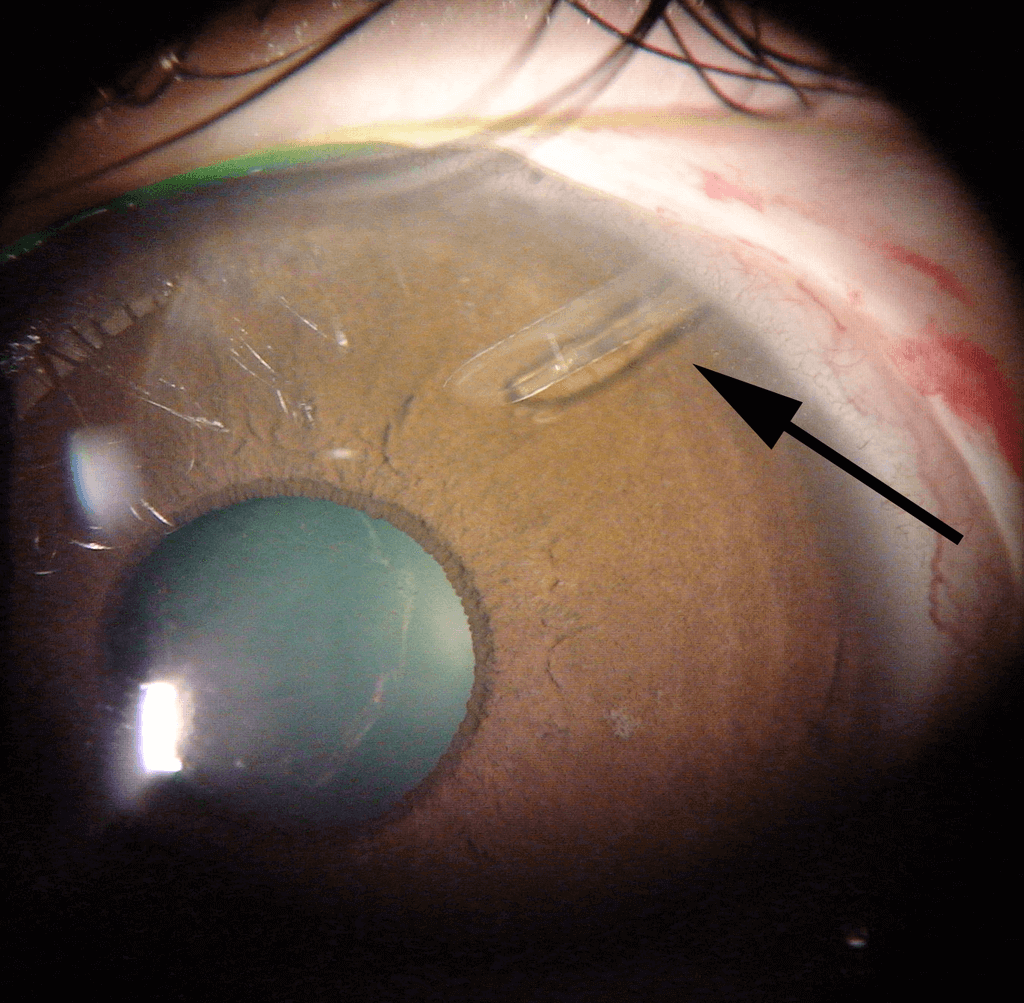
Glaucoma is usually treated with medication to lower the eye pressure. If medication or laser is not enough, surgery may be needed to control the pressure and prevent further vision loss. Tube surgery may be recommended if your eye pressure remains uncontrolled, as untreated high pressure can gradually damage your sight.
An aqueous shunt is a small drainage device that creates a new pathway for fluid to leave the eye. A tiny silicone tube carries fluid from inside the eye to a small plate placed under the outer surface of the eye (the conjunctiva). The fluid collects in a small blister, or bleb, behind the eyelid and is slowly absorbed. The tube and plate are mostly hidden under the eyelid.
Several implants are available. The most common are the Baerveldt, Molteno and Ahmed valves. They all work in a similar way, but the Ahmed valve has a built-in valve that helps prevent the pressure dropping too low in the first few weeks. The Baerveldt and Molteno implants do not have valves, so they are temporarily blocked with a stitch at the time of surgery.
The operation is usually carried out under general anaesthetic, though it can also be done under local anaesthetic with sedation. It normally takes about an hour. A pad or shield may be placed over the eye afterwards to protect it. A small patch of donor tissue may be used to cover the tube — this is the only part that might be visible later.