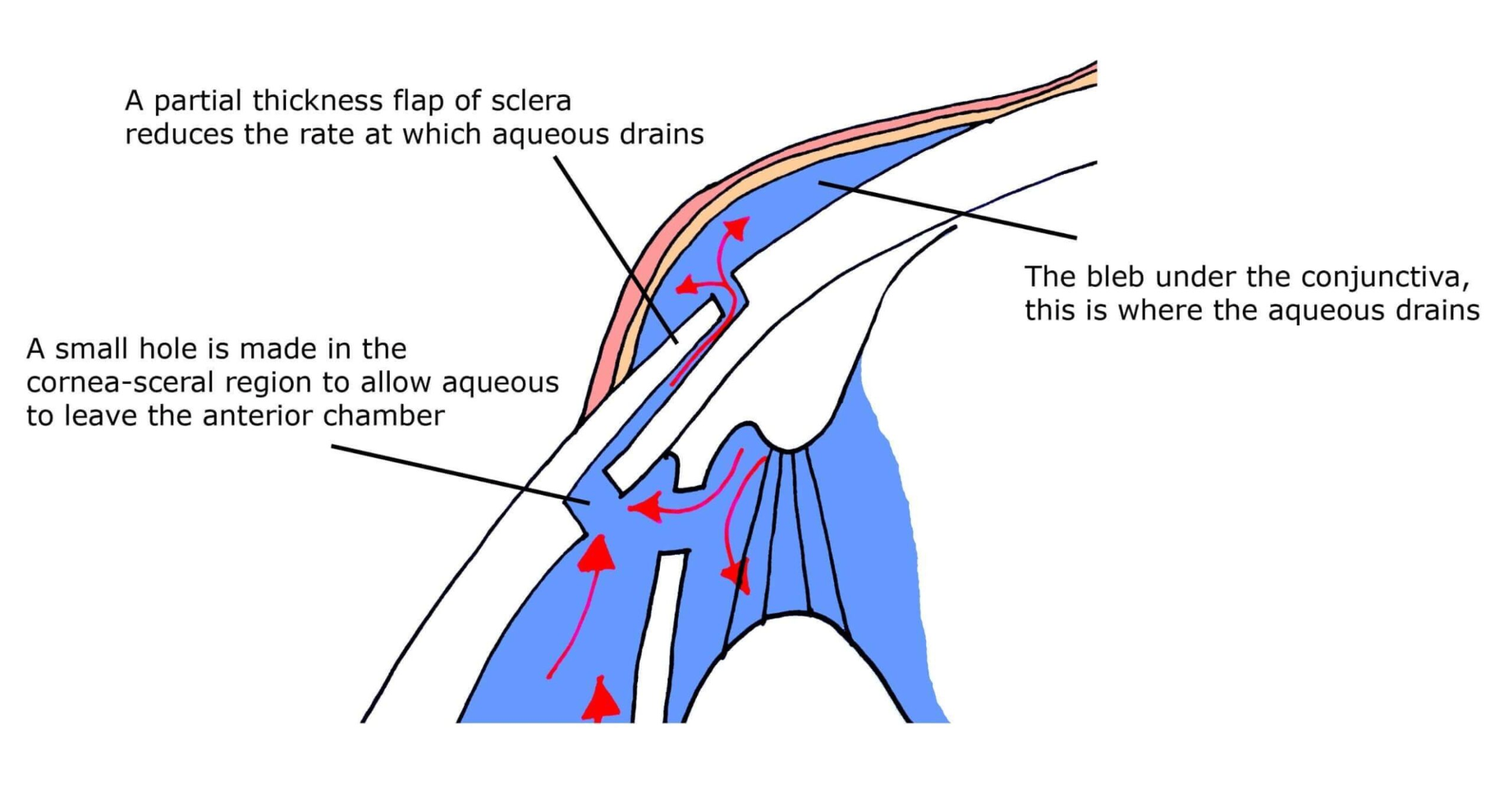

During trabeculectomy glaucoma surgery a small opening is made under the upper eyelid to let fluid escape and lower the pressure. The fluid that flows out forms a small cyst called a bleb, under the conjunctiva — the thin transparent layer covering the white of the eye.
Drainage surgery may fail to bring the pressure low enough, or the bleb may scar and close over time. This can happen shortly after the operation or many months later. In these cases, bleb needling may be the next step to restore drainage and achieve a lower eye pressure.
Bleb needling is generally considered a safe outpatient procedure. It is usually performed under local anaesthetic, with drops to numb the front of the eye followed by an injection around the eye. A fine needle is used to break down the scar tissue wall, improving drainage of the aqueous humour. An anti-scarring drug is then injected to help prevent further scar formation, and antibiotic and steroid drops may be given to reduce the risk of infection and inflammation.