
Treatments
Lens Replacement vs Laser Eye Surgery: which is right for you?
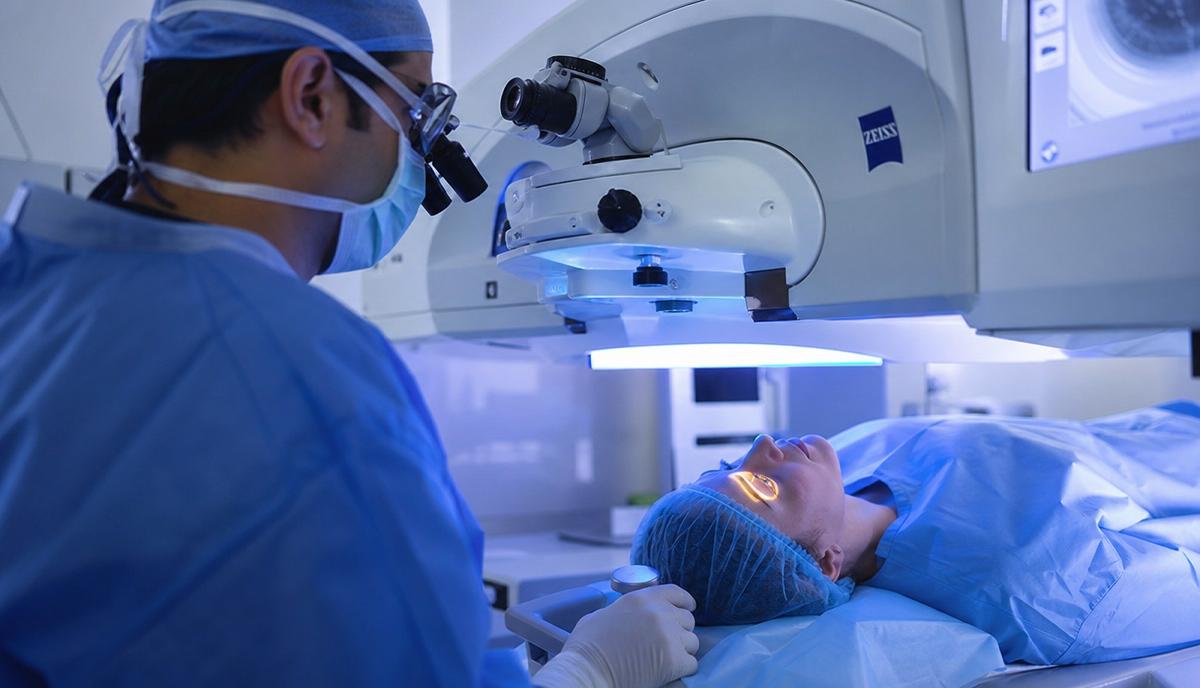
Wondering if laser eye surgery suits your eyes? Get an honest answer from Ms Pearsall's team — free, no obligation.
Considering laser eye treatment? Speak to consultant Ms Pearsall directly.
Book a laser eye consultationChoosing between laser eye surgery and lens replacement is one of the most common questions I hear in my private clinics. Both procedures aim for the same outcome — clear vision without the daily burden of glasses or contact lenses — but they work in very different ways, and the right answer depends far more on your eyes than on the technology itself.
How the two procedures differ
Laser eye surgery (LASIK, LASEK or SMILE) reshapes the front surface of the cornea to correct short-sight, long-sight or astigmatism. It is a fast, keyhole-style procedure with a very quick visual recovery — most patients are driving again within 24 to 48 hours.
Lens replacement surgery (also called refractive lens exchange, or RLE) removes your natural lens and replaces it with a bespoke intraocular lens. It is the same technique used in modern cataract surgery, but performed before a cataract has formed. Because we replace the lens itself, we can correct a much wider range of prescriptions and also prevent cataracts from ever developing.
Age is the biggest single factor
As a rule of thumb, patients in their 20s and 30s with a stable prescription and healthy corneas are usually excellent candidates for laser surgery. From the mid-40s onwards, the natural lens begins to stiffen (this is presbyopia — the reason you start reaching for reading glasses), and laser surgery can no longer correct near vision as elegantly.
For patients over 45, and especially over 50, lens replacement with a modern trifocal or extended-depth-of-focus lens usually gives a better long-term result: sharp distance, intermediate and reading vision from a single procedure, and no risk of cataracts later in life.
Prescription and corneal thickness
Very high prescriptions, thin corneas, or early signs of keratoconus can rule out laser surgery even in a younger patient. In those cases, an ICL (implantable contact lens) or lens replacement is often a much safer choice.
Lifestyle matters
A pilot, competitive swimmer, or someone with an active outdoor lifestyle may prioritise the fast, dry-eye-friendly recovery of SMILE. A patient who is exhausted by juggling varifocals for work and reading may prefer the once-and-done nature of lens replacement.
The honest answer
There is no single 'best' procedure — only the best procedure for your eyes and your life. Every patient I see receives a full diagnostic workup (corneal topography, wavefront analysis, OCT scanning and biometry) before I recommend anything. If laser is right for you, I will tell you. If it is not, I will explain why, and walk you through the alternatives.
If you would like a personal recommendation, book a consultation at any of our 17 UK clinics.
Explore more on Treatments
Related reading
- Can I have laser eye surgery if I am diabetic?
What people with diabetes need to know about LASIK, SMILE and LASEK eligibility, risks and outcomes.
- Can I have laser eye surgery if I have a squint or lazy eye?
What strabismus and amblyopia mean for laser eye surgery, and what results you can realistically expect.
- How long does laser eye surgery last?
Why the laser correction is permanent, and what can change your vision years after surgery.
- I'm nervous, can I be sedated for laser eye surgery?
Why feeling anxious before laser eye surgery is normal, and what sedation options are available on the day.
Keep reading
Ready to discuss your options?
Book a private consultation with Ms Tahmina Pearsall, or call our secretary directly — mention this article and we'll pull up the treatment details for you.
Prefer to read first? 10 questions to ask your cataract surgeon
Newsletter
Stay informed about your eye health
Get expert articles, clinic news and treatment updates from Dr Tahmina Pearsall — straight to your inbox.