
Treatments
Light treatment for dry eyes
Struggling with sore, gritty or irritated eyes? Speak to Ms Pearsall's team — free, no obligation.
Dry eye is one of the most common reasons people seek eye care. For many patients, drops and lid hygiene bring relief, but some people need more. Light-based treatments are increasingly used to treat dry eye, particularly when the problem is linked to the meibomian glands in the eyelids. These therapies can improve the quality of the tear film, reduce inflammation and provide longer-lasting relief than drops alone.
What is dry eye?
Dry eye happens when the eyes do not produce enough tears, or when the tears evaporate too quickly. The tear film has three layers: an oily layer, a watery layer and a mucous layer. The oily layer is produced by the meibomian glands along the eyelid margins and is essential for preventing evaporation. When these glands are blocked or inflamed, the tears evaporate faster, leading to gritty, burning, watery or red eyes. This is called evaporative dry eye, or meibomian gland dysfunction.
How light treatment works
Light-based dry eye treatments work in two main ways. They deliver controlled energy to the skin around the eyes, which warms the meibomian glands and helps release the blocked oil. They also reduce inflammation in the area, improving the overall function of the glands and the comfort of the eye surface. The most common forms of light treatment are intense pulsed light, also known as IPL, and low-level light therapy, sometimes called red light or LLLT.
IPL for dry eye
Intense pulsed light, or IPL, has been used in dermatology for many years and is now a well-established treatment for dry eye associated with meibomian gland dysfunction. A series of gentle light pulses is applied to the skin around the eyes. The light reduces inflammation, improves blood flow and helps unblock the oil glands. IPL is particularly helpful for people with rosacea or blepharitis, as these conditions are often linked to dry eye. Treatment is usually given as a course of four sessions, spaced a few weeks apart.
Low-level light therapy
Low-level light therapy, or LLLT, uses red and infrared light to warm the eyelids and stimulate the meibomian glands. It is a gentle, non-invasive treatment that can be performed in the clinic. A special mask or device is placed over the eyes and delivers controlled light and heat. The warmth helps melt the thickened oils inside the glands, allowing them to flow more easily. LLLT can be used alone or combined with other dry eye treatments.
What happens during a treatment session
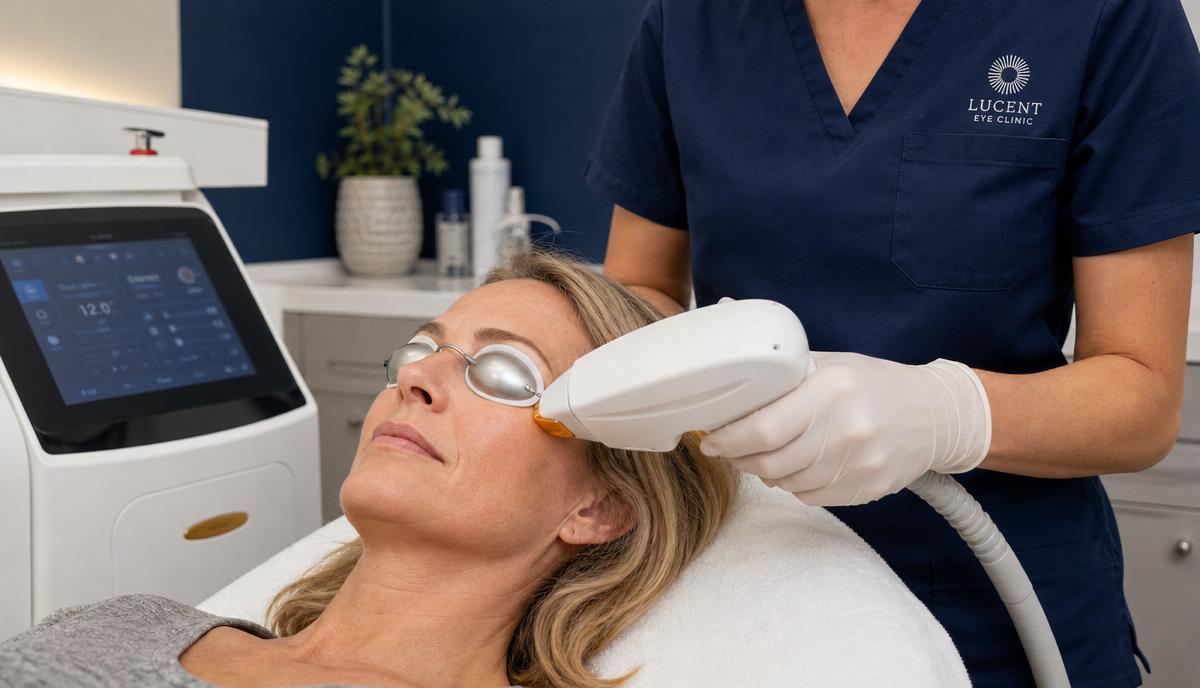
A protective shield is placed over the eyes, and a gel may be applied to the skin around the eyelids. The light device is then applied in short pulses. Most people feel a warm sensation but little discomfort. The session usually lasts around 10 to 15 minutes. After treatment, the practitioner may gently express the meibomian glands to clear the released oils. You can usually return to normal activities immediately.
Who can benefit from light treatment?
Light-based treatments are most helpful for people with evaporative dry eye due to meibomian gland dysfunction. Common signs include eyes that feel gritty or burning, redness, fluctuating vision, difficulty wearing contact lenses, and symptoms that worsen with screen use or air conditioning. IPL is also particularly useful for people with rosacea, facial redness or blepharitis. Not everyone is suitable, so a full dry eye assessment is needed first.
Results and aftercare
Most patients notice some improvement after the first or second session, with the full benefit appearing after completing the recommended course. Results can last for several months, and many people find they need fewer drops. Maintenance treatments every few months can help prolong the effect. Good lid hygiene, warm compresses and lubricating drops continue to play an important role in managing dry eye alongside light therapy.
Are there any risks or side effects?
Light-based dry eye treatments are generally safe when performed by trained practitioners. Common side effects include mild redness or warmth in the treated area, which usually settles within hours. IPL can make the skin more sensitive to the sun for a short time, so sun protection is important. Rarely, people with darker skin types or certain medical conditions may not be suitable. Your eye specialist will assess your skin type, eye health and medical history before recommending treatment.
Combining light treatment with other therapies
Dry eye is often best managed with a combination of treatments. Light therapy may be used alongside warm compresses, lid wipes, omega-3 supplements, prescription anti-inflammatory drops, punctal plugs or lubricating drops. The right plan depends on the type and severity of your dry eye. A tailored approach gives the best chance of long-term comfort.
Next steps
If you have persistent dry eye symptoms, book a dry eye assessment. We can examine your tear film, check your meibomian glands and discuss whether light-based treatment is suitable for you. For many patients, IPL or LLLT offers a welcome step up from daily drops and can make a lasting difference to eye comfort.
Explore more on Treatments
Related reading
- Can I have laser eye surgery if I am diabetic?
What people with diabetes need to know about LASIK, SMILE and LASEK eligibility, risks and outcomes.
- Can I have laser eye surgery if I have a squint or lazy eye?
What strabismus and amblyopia mean for laser eye surgery, and what results you can realistically expect.
- How long does laser eye surgery last?
Why the laser correction is permanent, and what can change your vision years after surgery.
- I'm nervous, can I be sedated for laser eye surgery?
Why feeling anxious before laser eye surgery is normal, and what sedation options are available on the day.
Keep reading
Ready to discuss your options?
Book a private consultation with Ms Tahmina Pearsall, or call our secretary directly — mention this article and we'll pull up the treatment details for you.
Prefer to read first? 10 questions to ask your cataract surgeon
Newsletter
Stay informed about your eye health
Get expert articles, clinic news and treatment updates from Dr Tahmina Pearsall — straight to your inbox.