
YAG capsulotomy
What is posterior capsule opacification (PCO) after cataract surgery?
Questions about your own eyes? Speak to Ms Pearsall's team — free, no obligation. UK private patients.
Considering cataract treatment? Speak to consultant Ms Pearsall directly.
Book a cataract consultationIf you had cataract surgery and your vision was crisp for months or years — then gradually became misty again — you are probably describing posterior capsule opacification (PCO). It is the most common late change after cataract surgery, and the fix is a quick outpatient laser.
The short answer
Posterior capsule opacification is a thickening of the natural membrane behind your intraocular lens implant. It is not a cataract coming back and it does not mean anything went wrong with your surgery. It is treated with YAG laser capsulotomy.
Why PCO happens
During cataract surgery the cloudy natural lens is removed but the very thin capsule that supported it is left in place to hold the new lens implant. Over time, a small number of remaining lens cells can grow on the back of this capsule, making it hazy. Light no longer passes cleanly through and vision becomes misty, glary or dim.
Typical symptoms
- Vision becomes gradually blurred, weeks to years after cataract surgery
- Reading print looks less crisp
- Halos, glare or ghosting appear at night
- Colours seem less vibrant
- Symptoms are similar to the original cataract
How PCO is diagnosed
An ophthalmologist confirms PCO with a slit-lamp examination. The lens implant looks clear but the membrane behind it shows opacity. Once confirmed, YAG laser capsulotomy is offered as a definitive treatment.
Why YAG laser is the answer
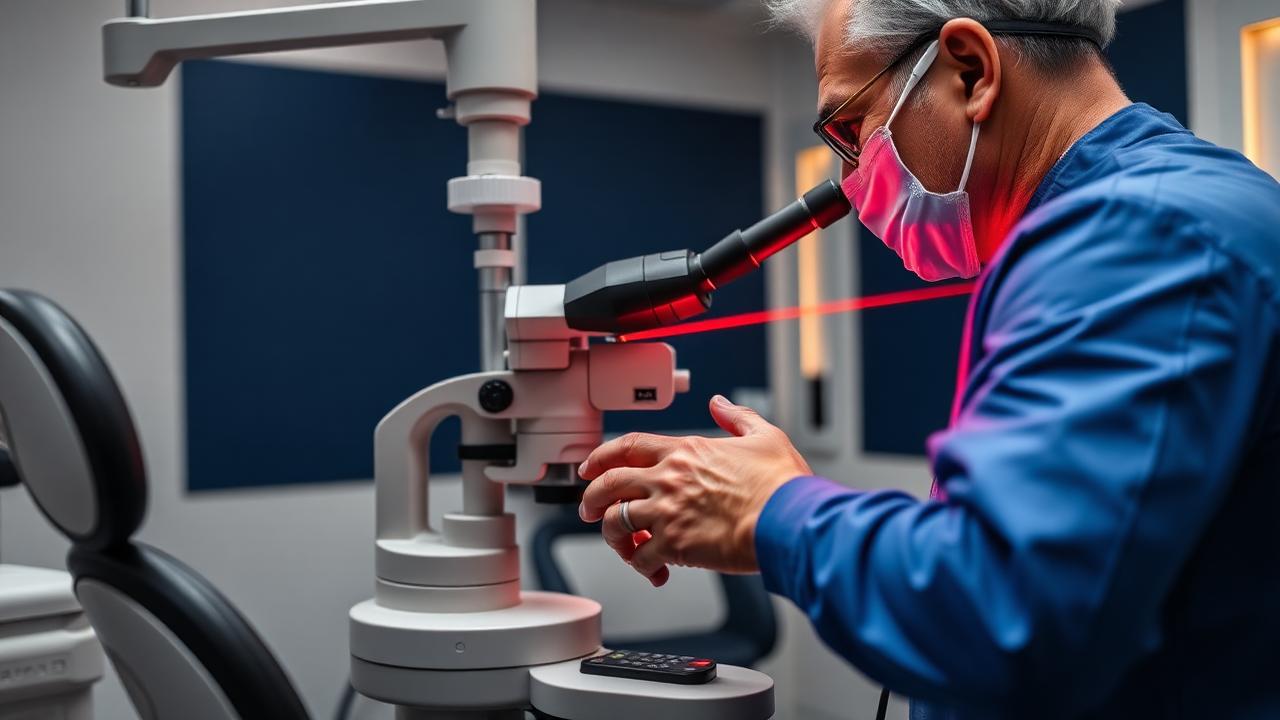
YAG laser capsulotomy uses a focused pulse of laser to make a small opening in the cloudy capsule directly behind the lens implant. Light passes through cleanly again, and vision usually improves within hours. The procedure takes 5–10 minutes per eye, is painless and is done in the clinic without needing hospital admission.
Book a consultant-led YAG assessment
Ms Tahmina Pearsall offers consultant-led YAG laser capsulotomy from £450 per eye across UK clinics. Visit the YAG laser capsulotomy clinic page to arrange an assessment.
Frequently asked questions
- Is PCO the same as a cataract coming back?
- No. A cataract cannot come back because the natural lens has been removed. PCO is a thickening of the capsule that holds your lens implant and is easily treated with YAG laser capsulotomy.
- How common is PCO after cataract surgery?
- PCO affects roughly 1 in 5 patients within five years of cataract surgery, though rates vary with lens type and surgical technique.
- Does everyone with PCO need YAG laser?
- Only patients whose vision is affected need YAG laser. Very mild PCO with no symptoms can simply be monitored.
- Can PCO come back after YAG laser?
- No. Once the capsule is opened with YAG laser, that opening is permanent and PCO does not come back.
Explore more on YAG capsulotomy
Related reading
YAG laser capsulotomy clinic — book a consultation- YAG laser capsulotomy cost UK: private prices and what's included in 2026
How much YAG laser capsulotomy costs privately in the UK, what a typical £450–£700 per-eye fee covers, and how to avoid hidden add-ons.
- YAG laser capsulotomy NHS waiting time: what to expect in 2026
How long you might wait for YAG laser capsulotomy on the NHS in 2026, why waits vary between trusts, and when to consider going private.
- Can I drive after YAG laser capsulotomy? DVLA standards and practical advice
When it is safe and legal to drive after YAG laser capsulotomy, DVLA visual standards, and what to expect on the day of treatment.
- YAG laser capsulotomy recovery timeline: hour by hour and day by day
A clear hour-by-hour and day-by-day recovery timeline after YAG laser capsulotomy, including when vision clears and when floaters settle.
Keep reading
Ready to discuss your options?
Book a private consultation with Ms Tahmina Pearsall, or call our secretary directly — mention this article and we'll pull up the treatment details for you.
Prefer to read first? 10 questions to ask your cataract surgeon
Newsletter
Stay informed about your eye health
Get expert articles, clinic news and treatment updates from Dr Tahmina Pearsall — straight to your inbox.