
Your questions answered
Aftercare in the first week: the questions everyone asks
Questions about your own eyes? Speak to Ms Pearsall's team — free, no obligation.
The first week is when almost all questions arise, and most of them are practical rather than medical. Follow your own surgeon's instructions where they differ — these are the general principles I give my patients.
How do I use the drops properly?
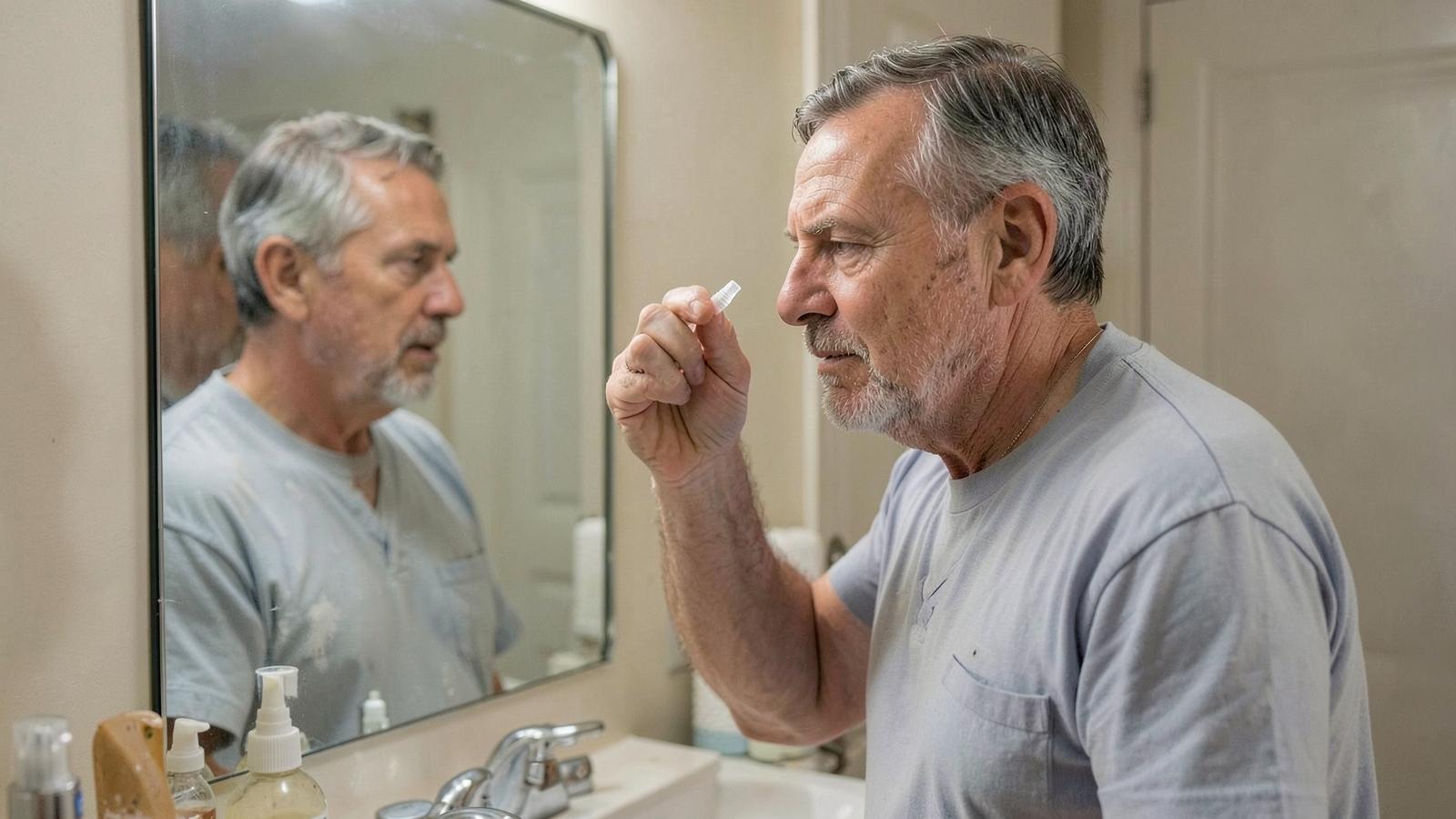
Wash your hands, tilt your head back, pull the lower lid down to make a pocket, and let one drop fall in without touching the eye with the bottle tip. One drop is enough — the eye cannot hold more. Leave five minutes between different drops.
Can I shower and wash my hair?
Yes, from the next day. Keep soap, shampoo and water out of the eye — wash your hair leaning backwards, and avoid letting the shower spray directly onto your face for a week.
How should I sleep?
Wear the shield at night for the first week to prevent accidental rubbing. Sleeping on your back or on the non-operated side is most comfortable, though sleeping position does not affect the implant.
Can I bend down or lift things?
Ordinary bending is fine. Avoid heavy lifting, straining and strenuous exercise for about a week.
Can I use screens, read and watch television?
Yes, straight away. Reading and screens do not harm the eye. If they cause tiredness, take breaks and use lubricating drops.
When can I drive?
Once you meet the legal vision standard and feel confident — typically a few days to a week, and only after your surgeon confirms it at your review.
When can I go back to work?
Desk work is usually possible after two to three days. Dusty, dirty or heavy manual work generally requires one to two weeks.
When can I swim or use a hot tub?
Avoid swimming pools for two weeks and hot tubs, saunas and steam rooms for four weeks, because of infection risk.
When can I wear eye make-up?
Leave it for two weeks, then start with new, unopened products.
Is it normal for the eye to feel gritty, watery or red?
Yes. Mild grittiness, watering, light sensitivity and a red patch on the white of the eye are all normal and settle within a week or two.
What is not normal?
Increasing pain, worsening vision, a sudden shower of floaters, flashing lights, or a curtain across your vision are urgent. Contact your surgeon's emergency number immediately — do not wait for your next appointment.
When will my vision be stable?
Useful vision typically returns within 24–48 hours, with continued refinement over four to six weeks. New glasses, if you need any, should be prescribed only after that point. Our day-by-day recovery guide sets out the full timeline.
Ask us your own question
Every eye is different, and a general answer is never a substitute for your own scans. Ms Tahmina Pearsall is an NHS Consultant Ophthalmic Surgeon with over 40,000 procedures performed, offering consultant-led private cataract surgery, lens replacement and laser eye surgery across 17 UK clinic locations. You can check current fixed prices, read patient reviews or book a consultation.
This article is general information written by a consultant ophthalmic surgeon and does not replace an individual examination.
Frequently asked questions
- Can I shower after cataract surgery?
- Yes, from the day after surgery, keeping soap and water out of the eye and avoiding direct spray on the face for a week.
- When can I use screens after eye surgery?
- Immediately. Screens and reading do not harm the healing eye, although they may feel tiring for the first few days.
- When can I swim after eye surgery?
- Avoid swimming pools for two weeks, and hot tubs, saunas and steam rooms for four weeks.
- What symptoms are an emergency after eye surgery?
- Increasing pain, worsening vision, a sudden shower of floaters, flashing lights or a shadow across your vision all require urgent contact with your surgeon.
Explore more on Your questions answered
Related reading
Eye surgery FAQs — consultation, surgery and aftercare- Your eye surgery consultation: 15 questions patients ask most
What actually happens at a private eye consultation in the UK — the scans, the timings, the paperwork, and the questions worth asking before you leave the room.
- The day of your eye surgery: everything patients ask
From arrival to discharge: what actually happens on the day of cataract, lens replacement or laser eye surgery in a UK private hospital.
- Costs, insurance and finance: straight answers for UK patients
What UK private eye surgery actually costs in 2026, what a fixed quote should include, when insurance pays, and how to compare finance offers sensibly.
- Am I suitable? The conditions patients worry about most
Diabetes, glaucoma, dry eyes, previous laser, a very high prescription — which conditions genuinely affect suitability for eye surgery, and which do not.
Ready to discuss your options?
Book a private consultation with Ms Tahmina Pearsall, or call our secretary directly — mention this article and we'll pull up the treatment details for you.
Prefer to read first? 10 questions to ask your cataract surgeon
Newsletter
Bleiben Sie über Ihre Augengesundheit informiert
Erhalten Sie Fachartikel, Klinik-News und Behandlungsupdates von Dr Tahmina Pearsall — direkt in Ihr Postfach.