
Can cataract surgery help when you have AMD?
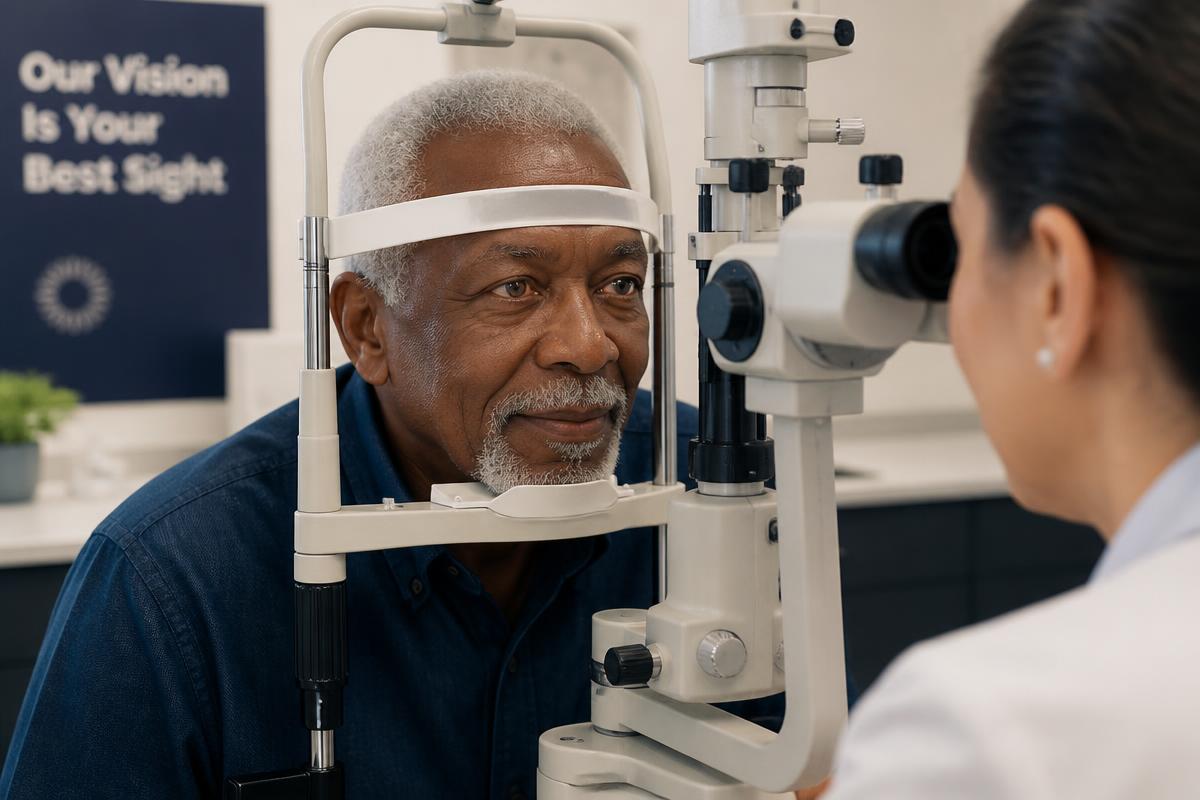
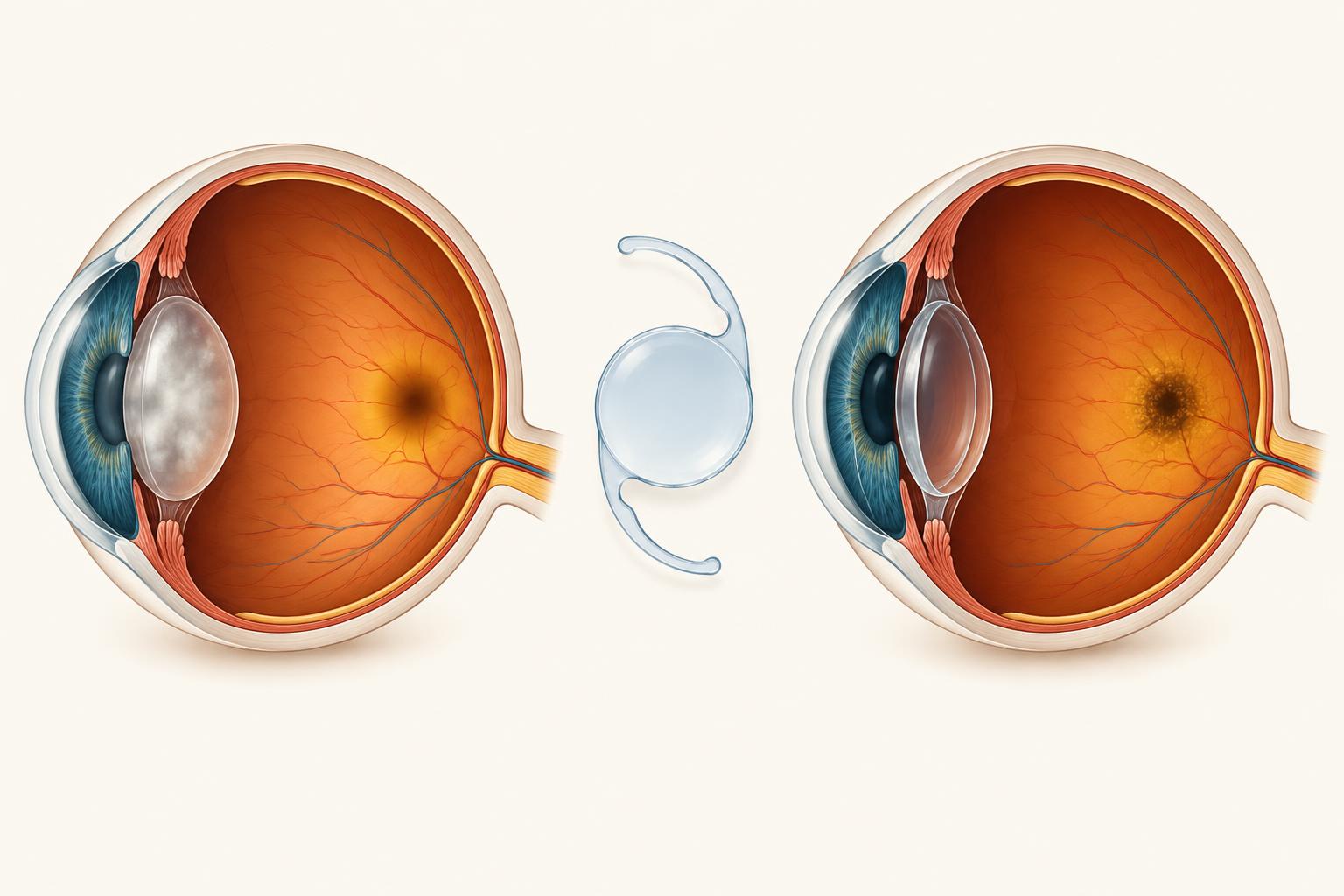
Cataract and age-related macular degeneration can both blur vision, but they affect different parts of the eye. A cataract clouds the natural lens. AMD affects the macula, the central part of the retina used for reading and recognising faces. Cataract surgery replaces the cloudy lens; it does not treat AMD or reverse retinal damage.
If the cataract is contributing significantly to poor vision, surgery may improve brightness, colour, contrast and clarity. The amount of detail you can ultimately see remains limited by the health of the macula. This is why a personalised retinal assessment is essential before deciding.
What may improve
- Brighter vision and more natural colour perception
- Clearer distance vision where the macula still has useful function
- Improved contrast where cataract clouding is a major contributor
- A clearer view of the retina for ongoing AMD monitoring and treatment
What surgery cannot do
Cataract surgery cannot repair macular scarring, remove distortion caused by AMD or guarantee reading vision. Glasses, magnifiers, brighter lighting or low-vision support may still be needed. These limitations are discussed clearly before you choose whether to proceed.
Assessment before surgery
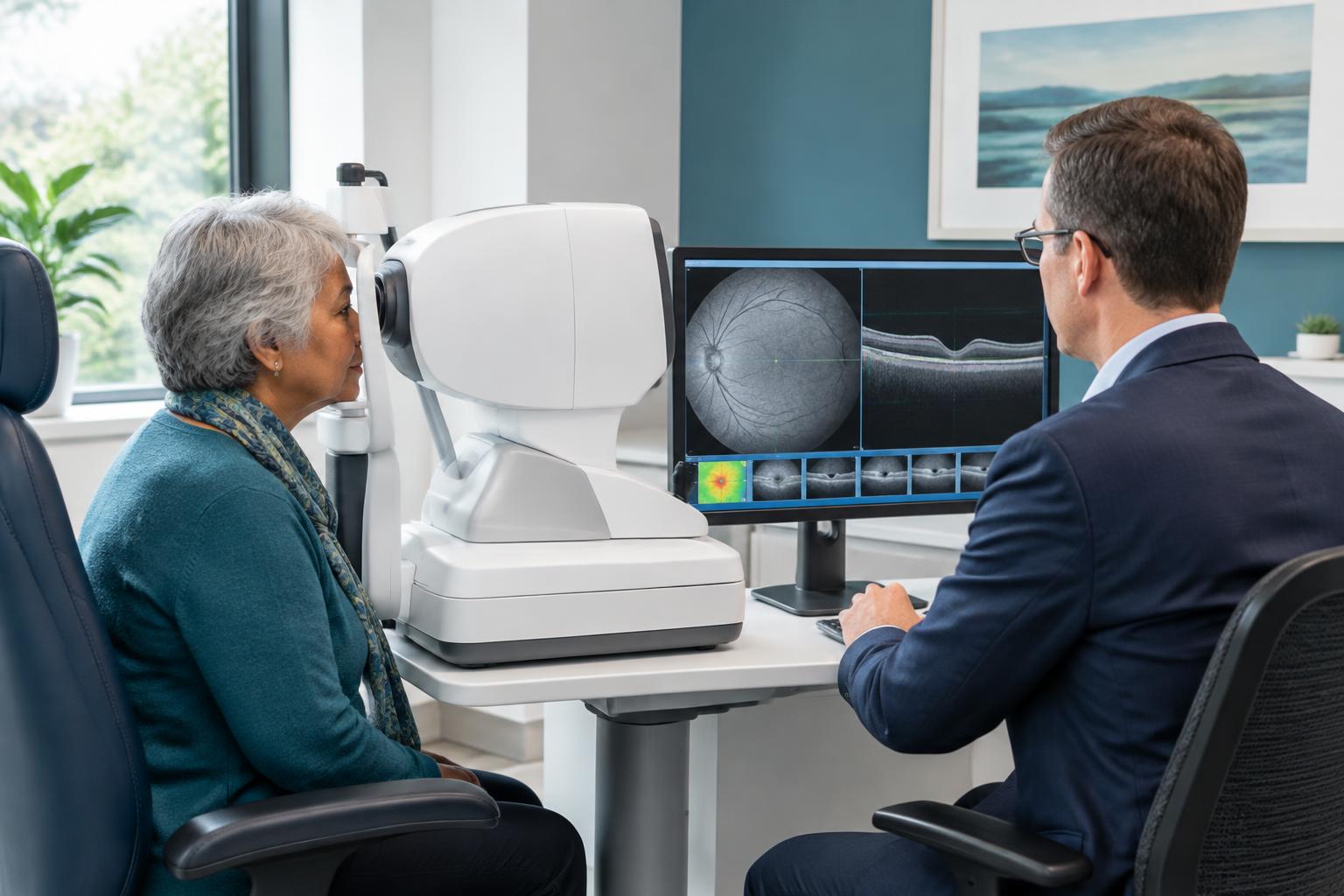
A dilated retinal examination and macular OCT scan help show whether AMD is dry, active wet or stable following treatment. Lens measurements, contrast needs and your day-to-day priorities are considered alongside the retinal findings. When wet AMD is active, timing may be coordinated with your retinal specialist and anti-VEGF injection schedule.
Choosing an artificial lens
A high-quality monofocal lens is usually the most suitable option because it does not split light and preserves as much contrast as possible. A toric monofocal lens may also help when corneal astigmatism is significant. Multifocal and trifocal lenses can reduce contrast and create halos, so they are generally avoided when macular function is compromised. The recommendation is based on your retinal health, measurements and visual priorities.
Recovery and ongoing AMD care
Recovery is usually similar to standard cataract surgery, but retinal monitoring continues separately. Keep all planned AMD appointments and injections. New central distortion, a dark patch, a sudden drop in vision, flashes, a shower of floaters or a curtain-like shadow needs urgent eye assessment rather than waiting for a routine follow-up.
Frequently asked questions
Can I have cataract surgery if I have age-related macular degeneration?
Many people with dry or wet AMD can have cataract surgery. Suitability and likely benefit depend on how much of the blurred vision comes from the cataract and how much comes from the macula. A detailed eye examination helps separate these causes before a recommendation is made.
Will cataract surgery make macular degeneration worse?
Current evidence does not show that routine cataract surgery accelerates AMD for most patients. Active wet AMD may need to be stabilised and the timing coordinated with retinal treatment. Your individual retinal findings are reviewed before surgery.
How much will my vision improve after cataract surgery with AMD?
Removing a cataract can improve brightness, colour, contrast and clarity, but it cannot restore central vision already lost through macular damage. The likely improvement varies, so the consultation focuses on realistic, personalised expectations.
Which lens implant is usually recommended for someone with AMD?
A monofocal lens is commonly preferred because it preserves contrast and avoids splitting light between focal points. Toric correction may be considered when significant corneal astigmatism is present. Multifocal lenses are generally avoided when macular function is reduced.
Can cataract surgery be timed around anti-VEGF injections?
Yes. For patients receiving injections for wet AMD, cataract surgery can often be planned between treatments once the retinal condition is sufficiently stable. Coordination with the retinal specialist is important.
What tests are needed before surgery?
Assessment usually includes a dilated retinal examination, macular OCT imaging, measurements for the lens implant and a discussion of day-to-day visual goals. Additional retinal review may be recommended when AMD is active or advanced.
A cataract and macular assessment together
Discuss your cataract, AMD, retinal scans and likely visual outcome directly with consultant ophthalmic surgeon Ms Tahmina Pearsall before making a decision.
The £250 consultation fee is charged separately from any treatment or surgery.
This page provides general information and does not replace an individual eye examination or advice from your retinal specialist.