
Eye conditions
Subconjunctival haemorrhage: UK guide to the red patch on your eye
Questions about your own eyes? Speak to Ms Pearsall's team — free, no obligation. UK private patients.
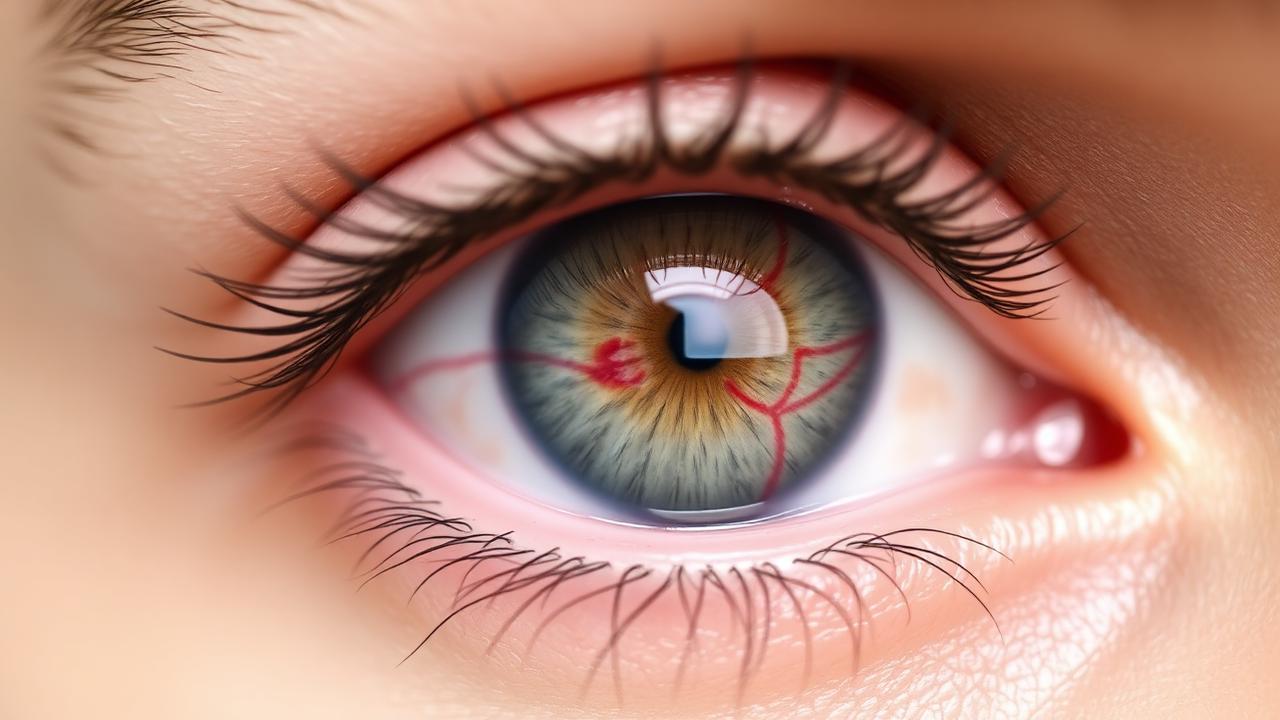
A subconjunctival haemorrhage is a bright red patch on the white of the eye caused by a tiny blood vessel bursting under the conjunctiva. It looks alarming but is almost always painless and self-limiting. In UK adults over 60 it is common enough to see several times a year in general practice.
What causes it
- Straining — coughing, sneezing, vomiting, heavy lifting, childbirth
- Minor trauma — rubbing the eye, a finger poke, a foreign body
- Contact lens misuse
- Anticoagulants — warfarin, DOACs, aspirin, clopidogrel
- Uncontrolled hypertension — a common association, especially with recurrent episodes
- Bleeding disorders — rarely, in patients on chemotherapy or with liver disease
- Spontaneous — often no cause is found
What it looks like
A bright, uniform red patch on the white of the eye with a clearly demarcated edge. Unlike conjunctivitis, there is no discharge, no itchiness and vision is not affected. The patch may spread over 24 hours before slowly fading — typically red → orange → yellow → clear over 10–14 days.
When it is not just a subconjunctival haemorrhage
See an eye specialist urgently if:
- The eye is painful, or vision is blurred
- The pupil looks abnormal or the iris looks distorted
- There was significant trauma — a punched or struck eye can hide serious injury
- Blood is inside the eye rather than under the conjunctiva (a hyphaema, sitting in the front chamber)
- The haemorrhage does not clear within three weeks
- You get recurrent episodes — this warrants a blood pressure check and clotting review
Treatment
None is needed. Do not use antibiotic drops — this is a bleed, not an infection. Cool compresses can be soothing in the first 24 hours. Lubricating drops help if the eye feels gritty.
Preventing recurrence
- Have your blood pressure checked
- Review anticoagulation dose with your GP if bleeds are frequent
- Avoid rubbing the eyes
- Manage cough or constipation properly to reduce straining
Book a consultant-led eye assessment
For recurrent haemorrhages, associated pain, or any concern about vision, book a consultation with my private practice or call 020 3137 3237.
Frequently asked questions
- Is a subconjunctival haemorrhage serious?
- In isolation, no. It is one of the most benign-looking dramatic signs in medicine. What matters is whether there is pain, vision loss, or trauma.
- How long does it take to clear?
- Typically 10–14 days, fading through red, orange and yellow as the blood is reabsorbed.
- Can I fly with a subconjunctival haemorrhage?
- Yes — it does not affect the eye's function.
- Why do I keep getting them?
- Check blood pressure, review any blood-thinning medication, and avoid vigorous eye-rubbing. Persistent episodes warrant a formal review.
Explore more on Eye conditions
Related reading
- Stye (hordeolum): UK causes, treatment and when to see a doctor
A UK consultant guide to styes — what causes them, how to treat them safely at home, and when a stubborn or recurring lump needs medical care.
- Chalazion: UK treatment options and when minor surgery is needed
A UK consultant guide to chalazia — the painless eyelid lumps that persist after styes settle — and how they are treated in NHS and private practice.
- Pinguecula: UK causes, symptoms and treatment options
What that yellow bump on the white of the eye is, why it forms, and when a pinguecula needs treatment or surgical removal.
- Pterygium: UK symptoms, treatment and surgery explained
A UK consultant guide to pterygium — the fleshy growth on the eye that can distort vision — and how modern surgery avoids the old high recurrence rates.
Ready to discuss your options?
Book a private consultation with Ms Tahmina Pearsall, or call our secretary directly — mention this article and we'll pull up the treatment details for you.
Prefer to read first? 10 questions to ask your cataract surgeon
Newsletter
Bleiben Sie über Ihre Augengesundheit informiert
Erhalten Sie Fachartikel, Klinik-News und Behandlungsupdates von Dr Tahmina Pearsall — direkt in Ihr Postfach.