
Lens Replacement
Is lens replacement or cataract surgery good for fishing?
Think you may need cataract surgery? Ms Pearsall can review your eyes privately in the UK — free, no-obligation call.
Considering cataract treatment? Speak to consultant Ms Pearsall directly.
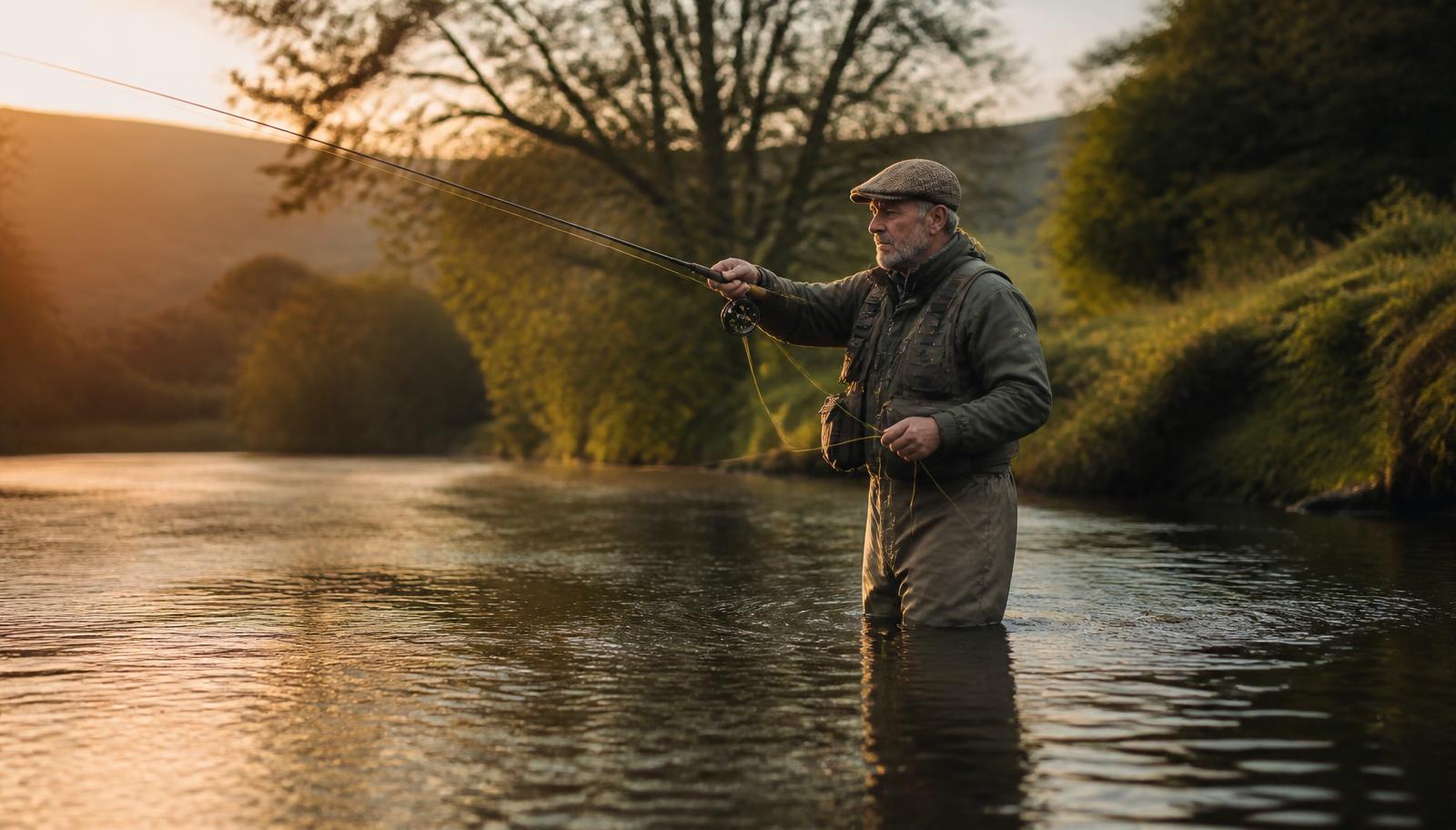
Book a cataract consultationFishing is a deceptively demanding sport for the eyes. You need sharp distance vision to track a float, follow a dry fly on moving water or read a rising fish at forty yards. You need close vision to tie a size 20 hook, thread a leader or bait a hook in fading light. And you spend hours in exactly the conditions that punish an ageing lens most: bright glare bouncing off water, low light at dawn and dusk, and constant changes between near and far focus.
For anglers who are noticing cataracts, or who are simply tired of hunting for reading glasses on the bank, lens replacement surgery and cataract surgery can be genuinely transformative. This guide explains what changes after surgery, which lens types suit fishing best, and how soon you can get back on the water.
Cataract surgery and lens replacement are the same operation
Both procedures remove the eye's natural lens and replace it with a clear artificial intraocular lens (IOL). The difference is the reason for doing it. Cataract surgery is performed when the natural lens has clouded and vision has deteriorated. Refractive lens replacement — also called refractive lens exchange — is performed on a clear lens to correct a prescription and remove the need for glasses. The surgery itself, the recovery and the lens choices are identical.
That matters for anglers, because it means the decision is not simply 'do I need surgery?' but 'which lens will serve my fishing best?'
What anglers notice first after surgery
The single biggest change most fishermen report is colour and contrast. A cataract acts like a yellow-brown filter: it dulls colours, flattens contrast and scatters light. Once it is removed, the water looks brighter, the greens on the bank look richer, and subtle movement on the surface becomes much easier to pick out. Many patients say they can see the fly, the float tip or a swirl in the water that they had simply stopped noticing.
The second change is glare. Cataracts scatter sunlight, so bright reflections off the surface can be blinding. A clear intraocular lens with a UV and blue-light filter dramatically reduces that scatter. Combined with good polarised sunglasses, most anglers find they can see into the water far better after surgery than before.
The third change is focus. Depending on the lens chosen, you may find you no longer need reading glasses to tie a knot, or that your distance vision is sharper than it has been in years.
The visual demands of fishing, distance by distance
- Far distance — reading the water, spotting rises, watching a float or a bite alarm, tracking a fly line, and safely wading or boat handling.
- Intermediate — the rod tip, the reel, the landing net, the tackle box at your feet and the bank in front of you.
- Near — tying knots, threading tippet through a fly eye, hooking maggots or worms, and reading a phone or fishing licence.
Fishing is unusual because it demands all three, often in poor light, and often when your hands are cold and wet. That is why lens choice matters so much.
Which lens is best for fishing?
- Monofocal lenses give the sharpest possible distance vision and the highest contrast in low light. For dawn and dusk sessions, night fishing, or spotting a fly on broken water, this is the cleanest optical result. The trade-off is that you will need reading glasses on a lanyard for knots and small tackle.
- EDOF (extended depth of focus) lenses stretch the range of focus, giving good distance and intermediate vision with fewer halos than a multifocal. Many anglers find this the best compromise: clear water-reading, a clear rod tip and reel, and only thin readers needed for the smallest knots.
- Multifocal or trifocal lenses give the best chance of being glasses-free from the water's edge to the hook eye. The cost is slightly lower contrast and more chance of halos and starbursts around lights — relevant if you drive home in the dark or fish at night under a head torch.
- Toric lenses correct astigmatism and can be combined with any of the above. If you have significant astigmatism, a toric lens is often the difference between good and excellent distance vision for tracking a float.
- Blended vision (mini-monovision) sets one eye slightly for near and one for distance. Some anglers adapt beautifully to this; others find it disrupts depth perception, which matters when judging a cast or netting a fish.
Night fishing, dawn starts and low light
If a large part of your fishing is done at dawn, dusk or after dark, be honest about it at your consultation. Contrast sensitivity in low light is the one area where multifocal lenses are weakest and monofocal lenses are strongest. Carp anglers doing overnight sessions, sea anglers fishing tides at night, and anyone who regularly drives home in the dark on unlit roads often do better with a monofocal or EDOF lens than with a full trifocal.
Halos around bite alarms, head torches and headlights are common in the first few months and usually fade as the brain adapts, but they are worth planning around rather than discovering afterwards.
Glare, UV and the water
Modern intraocular lenses filter ultraviolet light, and many also filter part of the blue spectrum. That is a real advantage for anglers, who receive a double dose of UV — direct sunlight plus reflection off the water. It does not replace sunglasses. Good polarised lenses remain the single most useful piece of kit for seeing into water, and they work better after surgery, not worse, because the eye is no longer scattering light internally.
Getting back on the bank after surgery
Lens replacement and cataract surgery are day-case procedures under local anaesthetic, taking around 15–20 minutes per eye. Vision is usually usable within 24–48 hours and continues to sharpen over several weeks. Fishing, however, involves specific risks in the first few weeks: waterborne bacteria, wind-blown dust, bending and lifting, and casting with a sudden head movement.
As a general guide, and always subject to your surgeon's advice: avoid the waterside completely for the first week while the eye is most vulnerable to infection. Gentle bank fishing with wraparound protective glasses is usually reasonable from around two weeks. Wading, boat fishing, sea fishing in spray, and any session where water may splash the face are best delayed until four weeks. Heavy tackle lifting, long overnight sessions and anything involving significant bending should also wait until around four weeks.
Never rub the eye if grit or fly line touches it, keep the prescribed drops going exactly as instructed, and take a spare pair of protective glasses in the tackle box.
Who is a good candidate?
The ideal candidate is an angler with healthy eyes other than the lens: a good retina, healthy cornea, no significant glaucoma and a reasonable tear film. If you have macular disease, diabetic retinopathy, severe dry eye or previous laser refractive surgery, a monofocal lens is usually the safer choice, and premium multifocal lenses may be inadvisable.
Realistic expectations matter too. The aim is excellent, comfortable vision for the fishing you actually do — not perfection at every distance in every light.
Talk about your fishing at the consultation
The most useful thing you can bring to your consultation is a clear description of your fishing: what species, what water, what time of day, how much night driving, and how much fine close work you do at the bank. That detail changes the lens recommendation more than any brochure.
Ms Tahmina Pearsall has performed over 40,000 intraocular procedures and offers the full range of monofocal, toric, EDOF and trifocal lenses. She personally carries out the measurements, the surgery and the follow-up, so the lens plan is built around how you use your eyes.
Next steps
Book a consultation to find out which lens best suits your eyes and your fishing. You will receive a full assessment including corneal mapping and macular OCT, an honest recommendation, and a clear written quote with no pressure to proceed.
Frequently asked questions
- Will cataract surgery help me see fish and floats better?
- Almost always, yes. Removing a cataract restores contrast and colour and reduces light scatter, so floats, fly lines, surface swirls and fish movement become much easier to see — particularly in bright conditions on water.
- How long after cataract surgery can I go fishing?
- Most surgeons advise staying away from the waterside for the first week because of infection risk. Gentle bank fishing with protective glasses is often possible at around two weeks, and wading, boat or sea fishing at around four weeks. Always follow your own surgeon's advice.
- Which lens is best for fishing — monofocal, EDOF or multifocal?
- Monofocal lenses give the sharpest low-light distance vision, which suits dawn, dusk and night fishing. EDOF lenses are a strong all-round compromise. Multifocal or trifocal lenses offer the best chance of tying knots without readers, but with slightly lower contrast and more halos at night.
- Will I still need reading glasses to tie knots?
- With a monofocal lens, yes — most anglers keep thin readers on a lanyard. With an EDOF lens you may need them only for the smallest knots, and with a trifocal lens most patients tie tippet and hooks without glasses.
- Do I still need polarised sunglasses after surgery?
- Yes. Intraocular lenses filter UV but do not cut surface glare. Polarised sunglasses remain essential for seeing into water, and they also protect the healing eye from wind, dust and splashes.
- Is lens replacement worth it if I do not have cataracts yet?
- For anglers over about 50 who are frustrated by reading glasses and a changing prescription, refractive lens exchange can be worthwhile, and it removes any future cataract. It is the same operation with the same lens options, so the decision depends on your eye health and expectations.
Explore more on Lens Replacement
Related reading
Greater London
Book a consultation in London
Ms Tahmina Pearsall FRCOphth sees London patients for lens replacement and private cataract surgery, with fixed written quotes from £2,750 per eye and 12 months of consultant aftercare included.
Also seeing patients in
Ready to discuss your options?
Book a private consultation with Ms Tahmina Pearsall, or call our secretary directly — mention this article and we'll pull up the treatment details for you.
Prefer to read first? 10 questions to ask your cataract surgeon
Newsletter
Restez informé sur la santé de vos yeux
Recevez articles d'expertise, actualités des cliniques et nouveautés en traitement de la part du Dr Tahmina Pearsall — directement dans votre boîte de réception.