
Treatment breakthroughs
Corneal cross-linking advances: faster protocols for keratoconus
Questions about your own eyes? Speak to Ms Pearsall's team — free, no obligation. UK private patients.
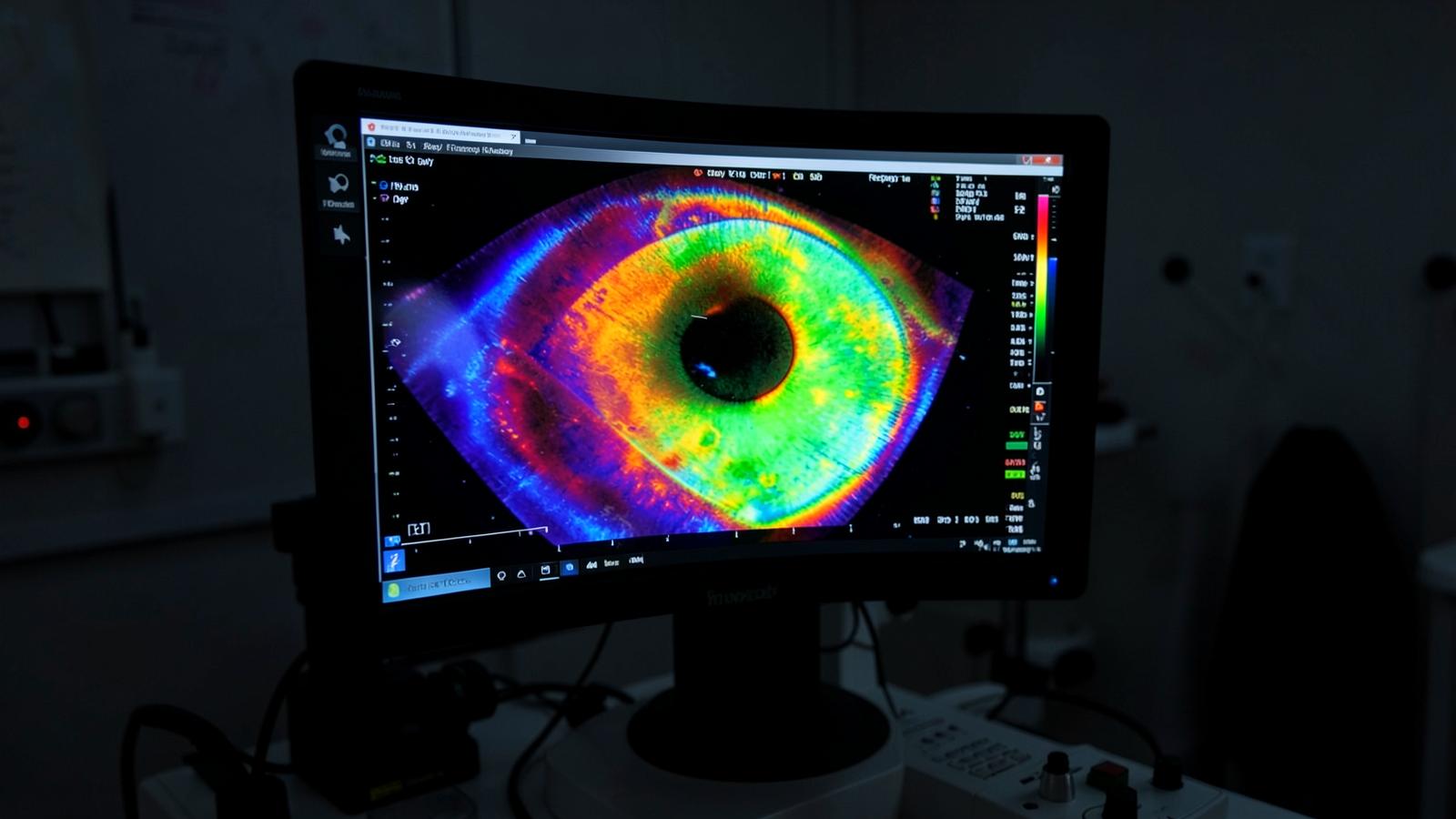
Keratoconus thins and steepens the cornea, usually starting in the teens or twenties. Cross-linking uses riboflavin and ultraviolet light to stiffen corneal collagen and stop the shape worsening.
What has changed
Original protocols required around thirty minutes of UV exposure. Accelerated protocols deliver a higher irradiance over a shorter period, with comparable stabilisation in published series.
Timing is everything
Cross-linking preserves the cornea you have; it does not restore the shape you had. Progression documented on topography should prompt prompt treatment, particularly in younger patients.
What comes afterwards
Once stable, vision is corrected with spectacles, specialist contact lenses or, in selected cases, implantable lenses. Standard laser eye surgery is not appropriate for keratoconic corneas.
What this means if you are considering surgery in the UK
New technology only helps when it is matched to the right eye. Ms Tahmina Pearsall FRCOphth is a UK consultant ophthalmic surgeon on the GMC specialist register with more than 50,000 eye procedures performed, and she assesses every patient personally before recommending anything. If keratoconus assessment is relevant to you, a consultation will tell you whether it changes your options — or whether a simpler, better-established treatment gives you a safer result.
Book a consultation with Ms Pearsall
Consultations are available at clinics across the UK, including London Harley Street, Birmingham, Manchester, Leeds, Edinburgh, Cardiff, Reading and Southampton. You can book a consultation, arrange a free 15-minute call, see treatment prices, read verified patient reviews or find your nearest clinic.
Explore more on Treatment breakthroughs
Related reading
- Gene therapy for inherited retinal disease: a progress report
Gene therapy has moved from laboratory to licensed treatment for some inherited retinal conditions. Here is a realistic picture.
- Presbyopia eye drops: what they can and cannot do
Reading drops shrink the pupil to sharpen near vision for a few hours. Useful for some, no substitute for surgery for others.
- Intense pulsed light for dry eye is now mainstream in UK clinics
IPL treats the blocked oil glands behind most chronic dry eye — and treating dry eye first protects surgical results.
- Minimally invasive glaucoma surgery: a gentler option
Micro-scale stents can lower eye pressure with far less disruption than traditional glaucoma surgery — often at the same time as cataract surgery.
Ready to discuss your options?
Book a private consultation with Ms Tahmina Pearsall, or call our secretary directly — mention this article and we'll pull up the treatment details for you.
Prefer to read first? 10 questions to ask your cataract surgeon
النشرة الإخبارية
ابقَ على اطلاع بصحة عينيك
احصل على مقالات متخصصة وأخبار العيادة وتحديثات العلاج من د. تهمينة بيرسال مباشرةً إلى بريدك.