
Eye technology
AI reading of OCT scans arrives in UK eye clinics
Questions about your own eyes? Speak to Ms Pearsall's team — free, no obligation. UK private patients.
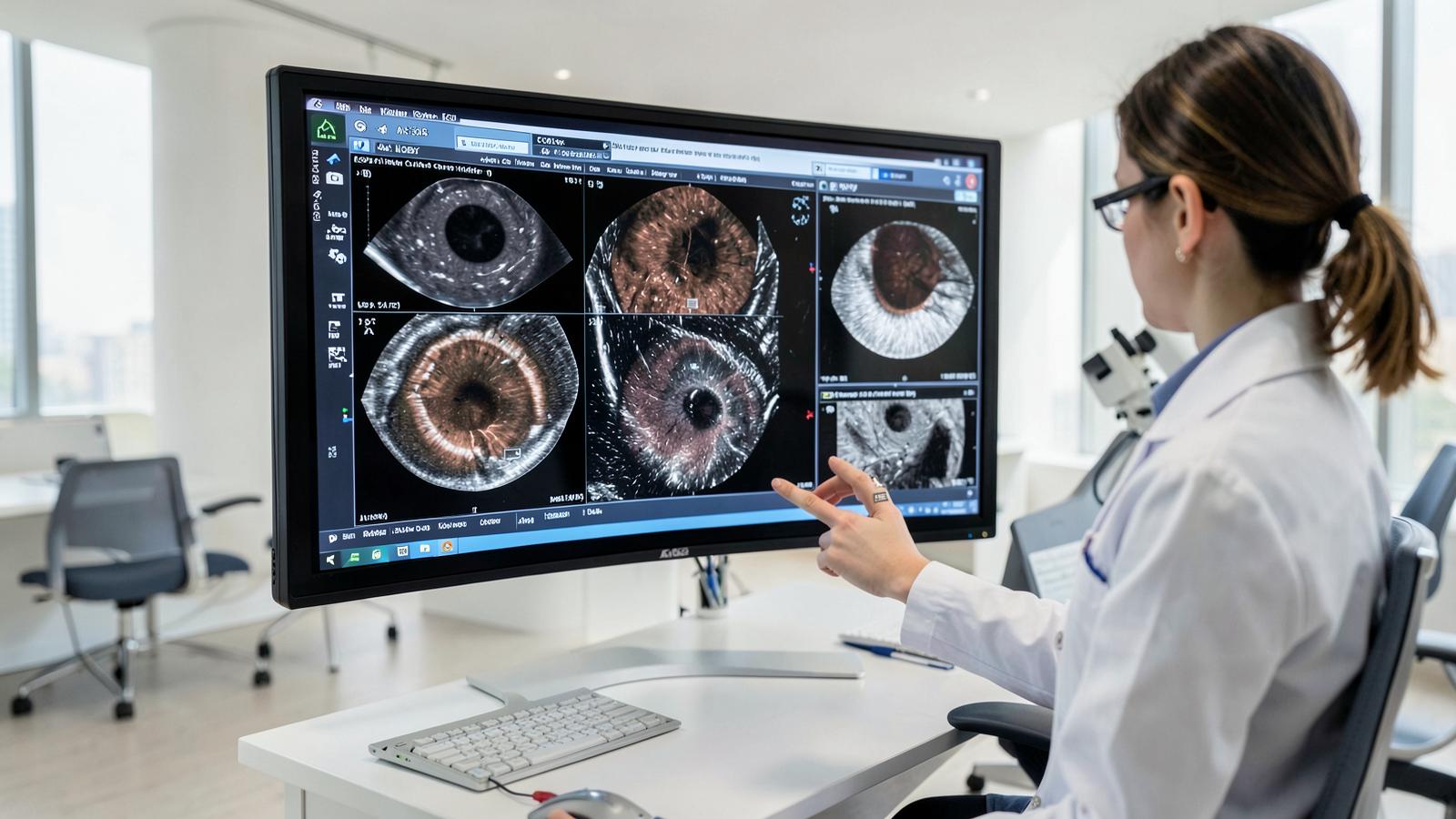
Optical coherence tomography produces a cross-section of the retina in seconds. The volume of scans generated across the NHS and private sector is enormous, and analysis software is now used to sort urgent findings from routine ones.
What the software is good at
Detecting fluid under or within the retina, measuring changes over time and flagging scans that deviate from a previous baseline. These are pattern tasks where consistency beats human fatigue.
What it cannot do
It cannot take a history, examine the front of the eye, weigh a patient's general health, or decide whether surgery is the right answer. Software narrows the list; a consultant makes the diagnosis.
Why this matters before cataract or lens surgery
Undetected macular disease is one of the main reasons a technically perfect lens operation disappoints. A full retinal assessment before surgery protects the result, and any reputable pre-operative work-up includes one.
What patients should ask
Ask whether your consultation includes OCT imaging, who interprets it, and whether findings are explained to you on the day.
What this means if you are considering surgery in the UK
New technology only helps when it is matched to the right eye. Ms Tahmina Pearsall FRCOphth is a UK consultant ophthalmic surgeon on the GMC specialist register with more than 50,000 eye procedures performed, and she assesses every patient personally before recommending anything. If advanced retinal imaging is relevant to you, a consultation will tell you whether it changes your options — or whether a simpler, better-established treatment gives you a safer result.
Book a consultation with Ms Pearsall
Consultations are available at clinics across the UK, including London Harley Street, Birmingham, Manchester, Leeds, Edinburgh, Cardiff, Reading and Southampton. You can book a consultation, arrange a free 15-minute call, see treatment prices, read verified patient reviews or find your nearest clinic.
Explore more on Eye technology
Related reading
- Light-adjustable lenses: fine-tuning vision after cataract surgery
A lens implant whose power can be adjusted with UV light after healing is changing how surgeons plan cataract and lens replacement results.
- Femtosecond laser-assisted cataract surgery: where the evidence stands
Laser-assisted cataract surgery automates several surgical steps. Here is what the evidence actually shows about outcomes.
- Extended depth-of-focus lenses: the quiet improvement in lens surgery
EDOF implants stretch a single focal point into a range — often with better night vision than older multifocal designs.
- Robotic assistance in eye surgery: what is real in 2026
Robotic systems can steady a surgeon's hand to a few microns. Their real use today is in retinal microsurgery, not routine cataracts.
Keep reading
Ready to discuss your options?
Book a private consultation with Ms Tahmina Pearsall, or call our secretary directly — mention this article and we'll pull up the treatment details for you.
Prefer to read first? 10 questions to ask your cataract surgeon
Newsletter
Stay informed about your eye health
Get expert articles, clinic news and treatment updates from Dr Tahmina Pearsall — straight to your inbox.