
Eye technology
Light-adjustable lenses: fine-tuning vision after cataract surgery
Think you may need cataract surgery? Ms Pearsall can review your eyes privately in the UK — free, no-obligation call.
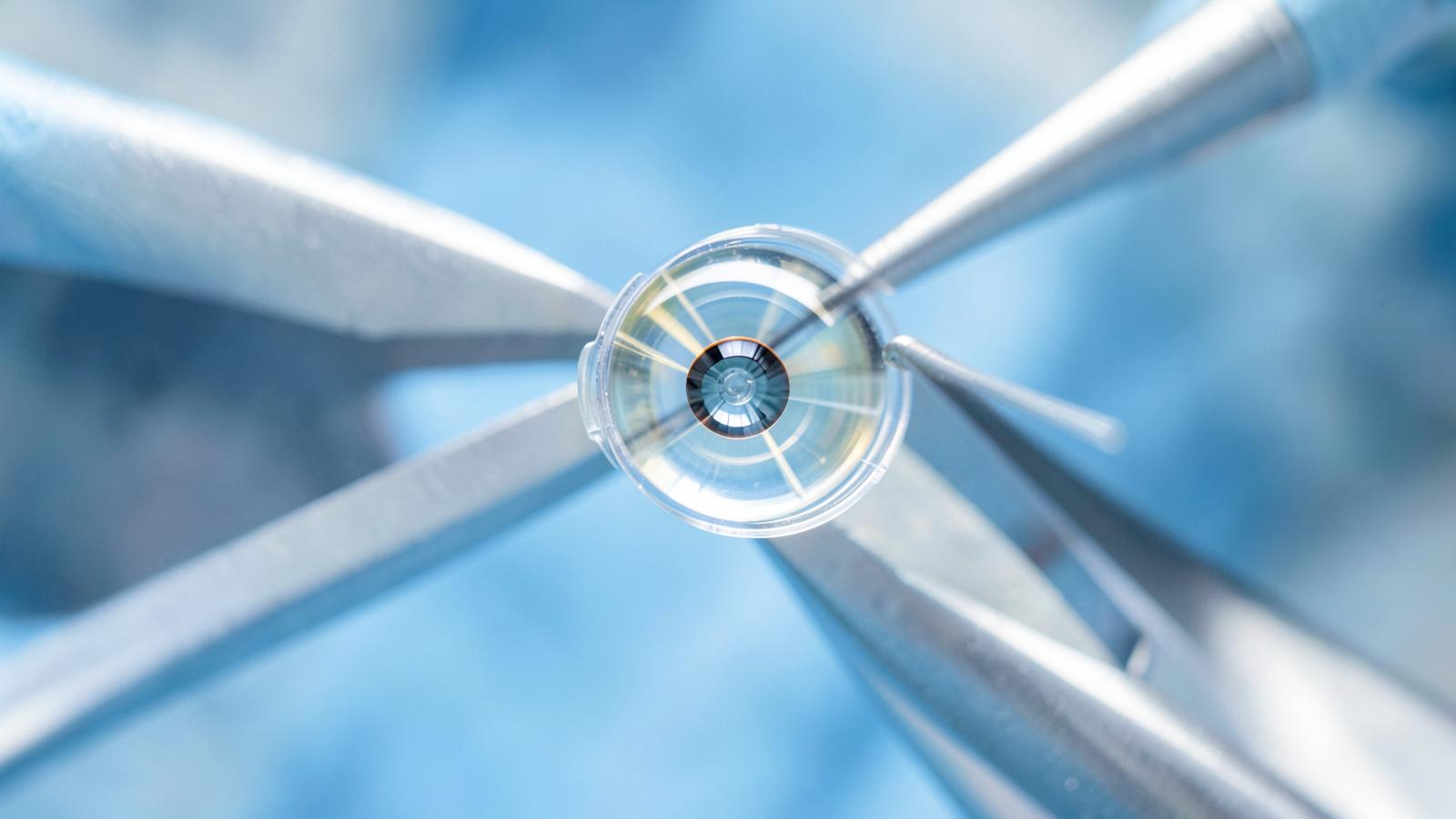
For decades the power of an intraocular lens had to be chosen before surgery and lived with afterwards. Light-adjustable lens technology changes that: the implant is made of a photosensitive material that can be reshaped in small steps with controlled ultraviolet light, weeks after the eye has settled.
How the adjustment works
The lens is implanted in the usual way during cataract surgery or refractive lens exchange. Once the eye has healed, vision is measured and a short, painless light treatment nudges the lens power towards the target. Two or three sessions are typical, and a final 'lock-in' treatment fixes the result permanently.
Who benefits most
Patients who have had previous laser eye surgery, those with unusual eye measurements, and anyone who wants a very precise distance or reading target are the strongest candidates — these are exactly the eyes where standard lens power calculations are least predictable.
The trade-offs to understand
Adjustable lenses require protective UV glasses between surgery and lock-in, and several extra clinic visits. They cost more than a standard monofocal implant. For many patients an accurately measured premium lens still gives an excellent result at a lower price, which is why the choice belongs in a consultation, not in an advert.
What good UK practice looks like
Precision biometry, careful corneal measurements and honest discussion of what each lens can and cannot deliver matter far more than the brand name on the box. A consultant-led assessment should end with a specific recommendation and the reasoning behind it.
What this means if you are considering surgery in the UK
New technology only helps when it is matched to the right eye. Ms Tahmina Pearsall FRCOphth is a UK consultant ophthalmic surgeon on the GMC specialist register with more than 50,000 eye procedures performed, and she assesses every patient personally before recommending anything. If a light-adjustable lens is relevant to you, a consultation will tell you whether it changes your options — or whether a simpler, better-established treatment gives you a safer result.
Book a consultation with Ms Pearsall
Consultations are available at clinics across the UK, including London Harley Street, Birmingham, Manchester, Leeds, Edinburgh, Cardiff, Reading and Southampton. You can book a consultation, arrange a free 15-minute call, see treatment prices, read verified patient reviews or find your nearest clinic.
Explore more on Eye technology
Related reading
- Femtosecond laser-assisted cataract surgery: where the evidence stands
Laser-assisted cataract surgery automates several surgical steps. Here is what the evidence actually shows about outcomes.
- AI reading of OCT scans arrives in UK eye clinics
Software that triages retinal scans is now part of routine eye care — supporting clinicians rather than replacing them.
- Extended depth-of-focus lenses: the quiet improvement in lens surgery
EDOF implants stretch a single focal point into a range — often with better night vision than older multifocal designs.
- Robotic assistance in eye surgery: what is real in 2026
Robotic systems can steady a surgeon's hand to a few microns. Their real use today is in retinal microsurgery, not routine cataracts.
Keep reading
Ready to discuss your options?
Book a private consultation with Ms Tahmina Pearsall, or call our secretary directly — mention this article and we'll pull up the treatment details for you.
Prefer to read first? 10 questions to ask your cataract surgeon
Newsletter
Stay informed about your eye health
Get expert articles, clinic news and treatment updates from Dr Tahmina Pearsall — straight to your inbox.