
Eye conditions
Heterochromia: UK guide to different coloured eyes
Questions about your own eyes? Speak to Ms Pearsall's team — free, no obligation.
Heterochromia — different coloured eyes — is famous for its associations with celebrities and animals. Most cases are congenital and completely benign. What matters clinically is whether the difference has always been there, or has developed over time.
Types of heterochromia
Complete heterochromia — each eye is a completely different colour (for example, one blue, one brown).
Sectoral (partial) heterochromia — a patch of a different colour within one iris.
Central heterochromia — the inner ring around the pupil is a different colour to the outer iris. Very common and often mistaken for a distinct eye colour.
Congenital heterochromia — usually harmless
In most cases, heterochromia is present from birth or emerges in infancy as pigment develops. It is either isolated or part of a benign genetic pattern. No treatment is needed and no ongoing surveillance is required.
Occasionally congenital heterochromia is a marker for a syndrome:
- Waardenburg syndrome — hearing loss, white forelock, wide-set eyes
- Sturge-Weber syndrome — facial port-wine stain, glaucoma
- Horner's syndrome from birth — smaller pupil and hypopigmented iris on the affected side
Acquired heterochromia — needs investigation
A change in iris colour in adulthood is different. Causes include:
- Trauma — iris atrophy after a blunt injury
- Fuchs heterochromic uveitis — a chronic low-grade inflammation causing gradual lightening of the affected iris
- Pigment dispersion — heavier pigmentation on the anterior iris surface
- Iris tumours — melanocytoma, melanoma. Rare but must not be missed.
- Latanoprost and similar glaucoma drops — darken the iris slowly over months
- Horner's syndrome acquired in early childhood — can lighten the iris on the affected side
When to seek review
- New difference in iris colour in an adult
- Any pigmented spot on the iris that is growing or changing shape
- Iris colour change with pain, redness, or light sensitivity
- Difference in pupil size accompanying the colour change
- One drooping eyelid alongside a smaller pupil (possible Horner's)
Investigation
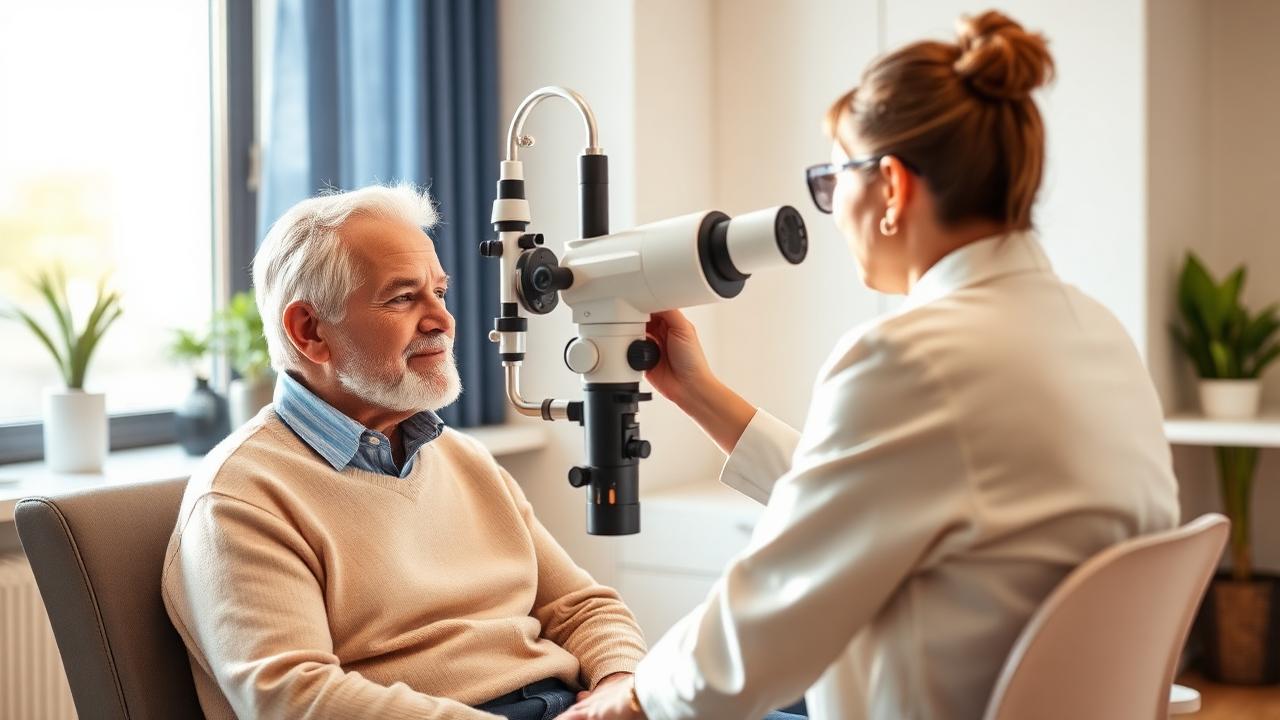
A slit-lamp examination is the mainstay. Anterior segment imaging (UBM, AS-OCT) and iris photography document changes over time. Suspected iris tumours are referred to a specialist ocular oncology service.
Book a consultant-led iris assessment
If you have noticed a change in your eye colour, an iris spot, or new pigment, book a consultation with my private practice or call 020 3137 3237.
Frequently asked questions
- Is heterochromia rare?
- Complete heterochromia is uncommon (under 1% of people). Sectoral and central heterochromia are much more frequent than most people realise.
- Can eye colour change in adulthood?
- True structural iris colour rarely changes without a cause. If it does, it warrants examination to rule out inflammation, trauma, medication effect or tumour.
- Do latanoprost drops permanently change eye colour?
- Yes — iris colour change with prostaglandin analogue glaucoma drops is usually permanent, so patients are counselled before starting.
- Can heterochromia cause vision problems?
- Isolated congenital heterochromia does not affect vision. Acquired forms may indicate underlying disease that can affect sight.
Explore more on Eye conditions
Related reading
- Stye (hordeolum): UK causes, treatment and when to see a doctor
A UK consultant guide to styes — what causes them, how to treat them safely at home, and when a stubborn or recurring lump needs medical care.
- Chalazion: UK treatment options and when minor surgery is needed
A UK consultant guide to chalazia — the painless eyelid lumps that persist after styes settle — and how they are treated in NHS and private practice.
- Pinguecula: UK causes, symptoms and treatment options
What that yellow bump on the white of the eye is, why it forms, and when a pinguecula needs treatment or surgical removal.
- Pterygium: UK symptoms, treatment and surgery explained
A UK consultant guide to pterygium — the fleshy growth on the eye that can distort vision — and how modern surgery avoids the old high recurrence rates.
Ready to discuss your options?
Book a private consultation with Ms Tahmina Pearsall, or call our secretary directly — mention this article and we'll pull up the treatment details for you.
Prefer to read first? 10 questions to ask your cataract surgeon
Newsletter
Restez informé sur la santé de vos yeux
Recevez articles d'expertise, actualités des cliniques et nouveautés en traitement de la part du Dr Tahmina Pearsall — directement dans votre boîte de réception.