
Second opinions
Unhappy with your eye consultation, surgery or aftercare? How a second opinion works
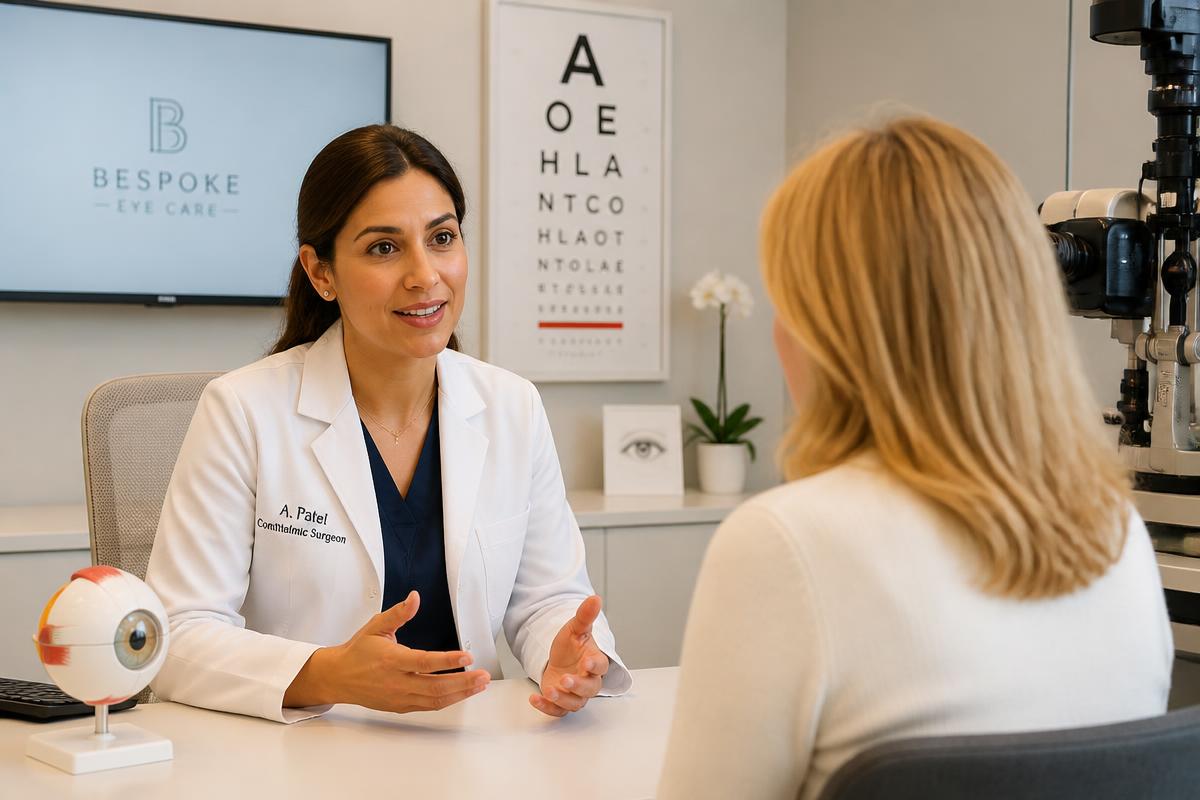
Most eye operations go well. But a small number of patients finish a consultation feeling rushed, finish an operation with vision that is not what they hoped for, or feel that their aftercare stopped before their questions were answered. If that is you, asking for a second opinion is a normal, reasonable step — and one that good surgeons welcome.
Urgent first: if you have had eye surgery and now have increasing pain, rapidly worsening vision, a very red eye, new flashes or floaters, or a shadow or curtain across your vision, do not wait for a second opinion. Contact the unit that operated on you the same day, or go to an eye casualty or A&E. These symptoms can signal infection, raised pressure or retinal detachment, which need treatment within hours.
When patients ask us for a second opinion
After a consultation. You were told you are not suitable for surgery, or that you need surgery sooner than you expected. You were offered one lens or one laser procedure without the alternatives being explained. The price changed between consultation and surgery, or you never saw the surgeon who would operate.
After cataract or lens replacement surgery. Vision is blurred or 'ghosted' weeks later. You need glasses more than expected. You see halos, glare, a dark crescent at the edge of vision, or double vision. One eye feels very different from the other. Read more about blurry vision after cataract surgery.
After laser eye surgery. Persistent dryness, fluctuating focus, night-driving glare, or a prescription that has drifted back. You have been offered an enhancement and want an independent view first.
With glaucoma. You are on several drops and still told pressure is high, or you have been offered laser or surgery and want to understand why. See our guide to a glaucoma second opinion.
With an eyelid lump. A stye or chalazion keeps coming back, or a lump has changed appearance and you want it properly assessed or removed. See stye and chalazion removal in London.
After aftercare ended. You were discharged but still have symptoms, or follow-up was handed to someone you had not met and you were not sure who to call.
What a second opinion with Ms Pearsall involves
You see Ms Pearsall personally. She takes a full history, reads your previous records and operation notes, and repeats the measurements that matter — vision, refraction, eye pressure, corneal mapping where relevant, a macular OCT scan and a dilated examination of the lens implant, capsule and retina.
She then explains, in plain language, what she has found: whether the eye is healing normally and simply needs time; whether there is a treatable cause such as dry eye, posterior capsule opacification (treatable with YAG laser), residual prescription, swelling at the back of the eye or a lens position issue; and what the realistic options are, including doing nothing.
You leave with a clear written summary that you can share with your GP, your optician or your original surgeon.
Bring these to the appointment
Your operation note and discharge letter, any consultation letters, the name and power of any lens implant, your glasses and latest optician prescription, and a list of eye drops and other medicines. Under UK data-protection law you can ask any provider for a copy of your records with a subject access request; they should normally respond within one month, usually free of charge.
Do I have to tell my original surgeon?
No. You are free to seek an independent view. Many patients do choose to share the summary with their original team, and it often helps everyone — especially if further treatment is needed where the first operation was done.
If you want to raise a concern or complaint
A second opinion is a clinical assessment, not a complaint. If you also want to raise a concern, start with the provider's own complaints process. NHS patients in England can escalate to the Parliamentary and Health Service Ombudsman; many private providers are members of the Independent Sector Complaints Adjudication Service (ISCAS). Concerns about an individual doctor's fitness to practise go to the General Medical Council. Ms Pearsall's role is to assess your eyes honestly and plan your care, not to comment on another clinician's conduct.
Where you can be seen
Appointments are available at Harley Street, London and other clinic locations, including Brighton & Hove and Liverpool. Patients travel from across the UK and from Jersey, Guernsey and the Isle of Man. Ask the secretary which clinic and date suits you.
About Ms Tahmina Pearsall
Ms Tahmina Pearsall is a consultant ophthalmic surgeon who qualified in 1993 and has more than 30 years of experience and over 50,000 procedures performed. She trained at Moorfields Eye Hospital, St Thomas' Hospital and Addenbrooke's Hospital, and sees private patients at multiple clinic locations, including Harley Street in London. Read her full credentials.
Patients sometimes search for her as 'Dr Pearsall'. She is a medical doctor; by UK surgical tradition, consultant surgeons use the title Ms or Mr.
Ms Pearsall's private practice covers cataract surgery, lens replacement, laser eye surgery (LASIK, LASEK, PRK and SMILE), glaucoma assessment and treatment, stye and chalazion (eyelid cyst) removal, eyelid lump and lesion removal and YAG laser capsulotomy.
Fees
The first telephone enquiry is free — arrange a free initial call to explain what happened and check whether a review is likely to help. A full clinical consultation with Ms Pearsall costs £250. Treatment prices are listed on the pricing page and confirmed in writing after examination.
This article is general information written for patients and does not replace an individual examination. A second opinion is an independent clinical assessment; it is not a legal review and does not by itself decide whether care elsewhere was right or wrong.
Frequently asked questions
- Can I get a second opinion if I am unhappy with my eye surgery?
- Yes. Any patient can ask for an independent consultant review after cataract, lens replacement or laser eye surgery. You do not need permission from the original surgeon, and a GP referral is helpful but not required for a private appointment.
- How much does a private eye second opinion cost with Ms Pearsall?
- The first telephone enquiry is free. A full clinical consultation with Ms Tahmina Pearsall costs £250. Any treatment is quoted separately in writing after examination.
- What should I bring to an eye second opinion?
- Your operation note, discharge and consultation letters, the name and power of any lens implant, your glasses and latest prescription, and a list of current eye drops and medicines.
- Will Ms Pearsall tell me whether my previous surgeon made a mistake?
- Her role is to examine your eyes, explain clearly what she finds and recommend realistic options. A second opinion is a clinical assessment rather than a legal review; concerns about care should go through the provider's complaints process.
- Is it Dr Pearsall or Ms Pearsall?
- Both refer to the same doctor. Tahmina Pearsall is a medical doctor and consultant ophthalmic surgeon; by UK surgical tradition, consultant surgeons use the title Ms or Mr.
- What symptoms after eye surgery are an emergency?
- Increasing pain, rapidly worsening vision, a very red eye, new flashes or floaters, or a curtain across your vision. Contact the operating unit the same day or attend eye casualty or A&E rather than waiting for a second opinion.
Explore more on Second opinions
Related reading
- Still blurry after cataract surgery? Common causes and when to get a second opinion
Some blur in the first days is normal. Blur that persists for weeks, or returns months later, usually has a cause that can be found — and often treated.
- Second opinion from a consultant eye surgeon in London's Harley Street
An independent consultant review in central London for patients who want a fresh, unhurried assessment before or after eye surgery.
- Stye and chalazion (eyelid cyst) removal in London: a consultant's guide
Most styes settle on their own. A chalazion that lasts for weeks, keeps returning or changes appearance may need a short procedure — here is how it works.
- Private eye specialist in Brighton & Hove: second opinions, cataract, lens and laser
Consultant-led eye care for Brighton, Hove and the wider Sussex coast — including independent second opinions for patients unhappy with previous care.
Treatment information and clinic locations
Keep reading
Have a question about your eyes?
Leave your details and the secretary will call you back. The first phone call is free; a clinical consultation is £250.
Ready to discuss your options?
Book a private consultation with Ms Tahmina Pearsall, or call our secretary directly — mention this article and we'll pull up the treatment details for you.
Prefer to read first? 10 questions to ask your cataract surgeon
Newsletter
Stay informed about your eye health
Get expert articles, clinic news and treatment updates from Dr Tahmina Pearsall — straight to your inbox.