
Glaucoma
Ocular hypertension: high eye pressure without glaucoma — what it means
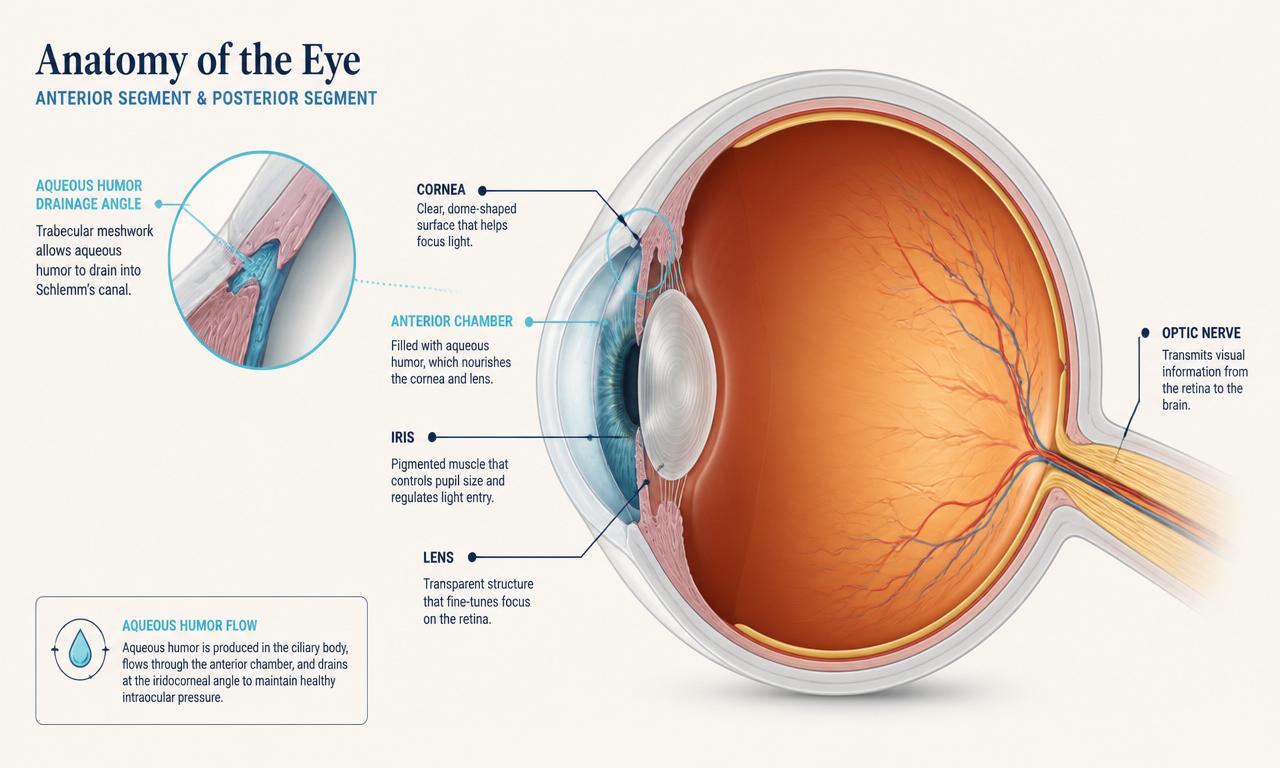
Ocular hypertension means the pressure inside the eye is above the usual range (roughly above 21 mmHg) but the optic nerve and visual field are healthy. It is common and is often picked up at a routine eye test.
Does it mean I will get glaucoma?
Not necessarily. Most people with ocular hypertension never develop glaucoma, but the risk is higher than average and increases with higher pressure, thinner corneas, older age, a family history of glaucoma and some optic nerve features.
Is the reading accurate?
Air-puff readings can overestimate pressure. A specialist uses contact (Goldmann) tonometry, measures corneal thickness — thick corneas read falsely high and thin corneas falsely low — and examines the drainage angle with gonioscopy.
Treatment
UK guidance from NICE recommends offering treatment to people with eye pressure of 24 mmHg or more who are at risk of visual impairment in their lifetime, with selective laser trabeculoplasty (SLT) offered as a first option, and drops as an alternative. Lower pressures with few risk factors are usually monitored.
Monitoring
Regular checks of pressure, optic nerve OCT and visual fields, typically every one to two years, or more often if pressure is higher. Read about being a glaucoma suspect and what glaucoma is.
Seeing Ms Tahmina Pearsall
Ms Pearsall assesses raised eye pressure and treats glaucoma, including SLT laser. See glaucoma care.
Ms Tahmina Pearsall is a consultant ophthalmic surgeon who qualified in 1993 and has more than 30 years of experience and over 50,000 procedures performed. She trained at Moorfields Eye Hospital, St Thomas' Hospital and Addenbrooke's Hospital, and sees private patients at multiple clinic locations, including Harley Street in London. Read her full credentials.
Ms Pearsall sees patients at Harley Street, London and other clinic locations. Patients travel from across the UK, including Brighton & Hove and Liverpool, and from Jersey and Guernsey and the Isle of Man.
The first telephone enquiry is free — arrange a free initial call to explain what happened and check whether a review is likely to help. A full clinical consultation with Ms Pearsall costs £250. Treatment prices are listed on the pricing page and confirmed in writing after examination.
This article is general information written for patients and does not replace an individual examination.
Frequently asked questions
- What eye pressure is considered high?
- Pressures above about 21 mmHg are above the usual range. Treatment is generally considered at 24 mmHg or more in people at risk, depending on other factors.
- Does ocular hypertension need treatment?
- Not always. It depends on the pressure level, corneal thickness, age, family history and optic nerve findings. Many people are monitored rather than treated.
- Can ocular hypertension be treated with laser?
- Yes. Selective laser trabeculoplasty (SLT) is a quick clinic laser that lowers pressure and is recommended in UK guidance as a first treatment option for many people.
Explore more on Glaucoma
Related reading
Glaucoma UK — symptoms, SLT laser & surgery- What are the benefits of early cataract surgery for glaucoma patients?
Why glaucoma patients should consider cataract surgery sooner, and how it can protect both vision and eye pressure control.
- 5 common myths about glaucoma: an expert view
A consultant ophthalmologist separates fact from fiction about glaucoma, eye pressure and sight loss.
- Being a "Glaucoma Suspect"
What it means to be labelled a glaucoma suspect, why early monitoring matters, and what tests are used to decide if treatment is needed.
- What is Glaucoma?
Glaucoma is a group of eye conditions that damage the optic nerve. Learn how it develops, who is at risk, what the symptoms are and how it is treated.
Keep reading
Have a question about your eyes?
Leave your details and the secretary will call you back. The first phone call is free; a clinical consultation is £250.
Ready to discuss your options?
Book a private consultation with Ms Tahmina Pearsall, or call our secretary directly — mention this article and we'll pull up the treatment details for you.
Prefer to read first? 10 questions to ask your cataract surgeon
Newsletter
Stay informed about your eye health
Get expert articles, clinic news and treatment updates from Dr Tahmina Pearsall — straight to your inbox.