
Glaucoma
Glaucoma test: what happens at an optician and at a specialist assessment
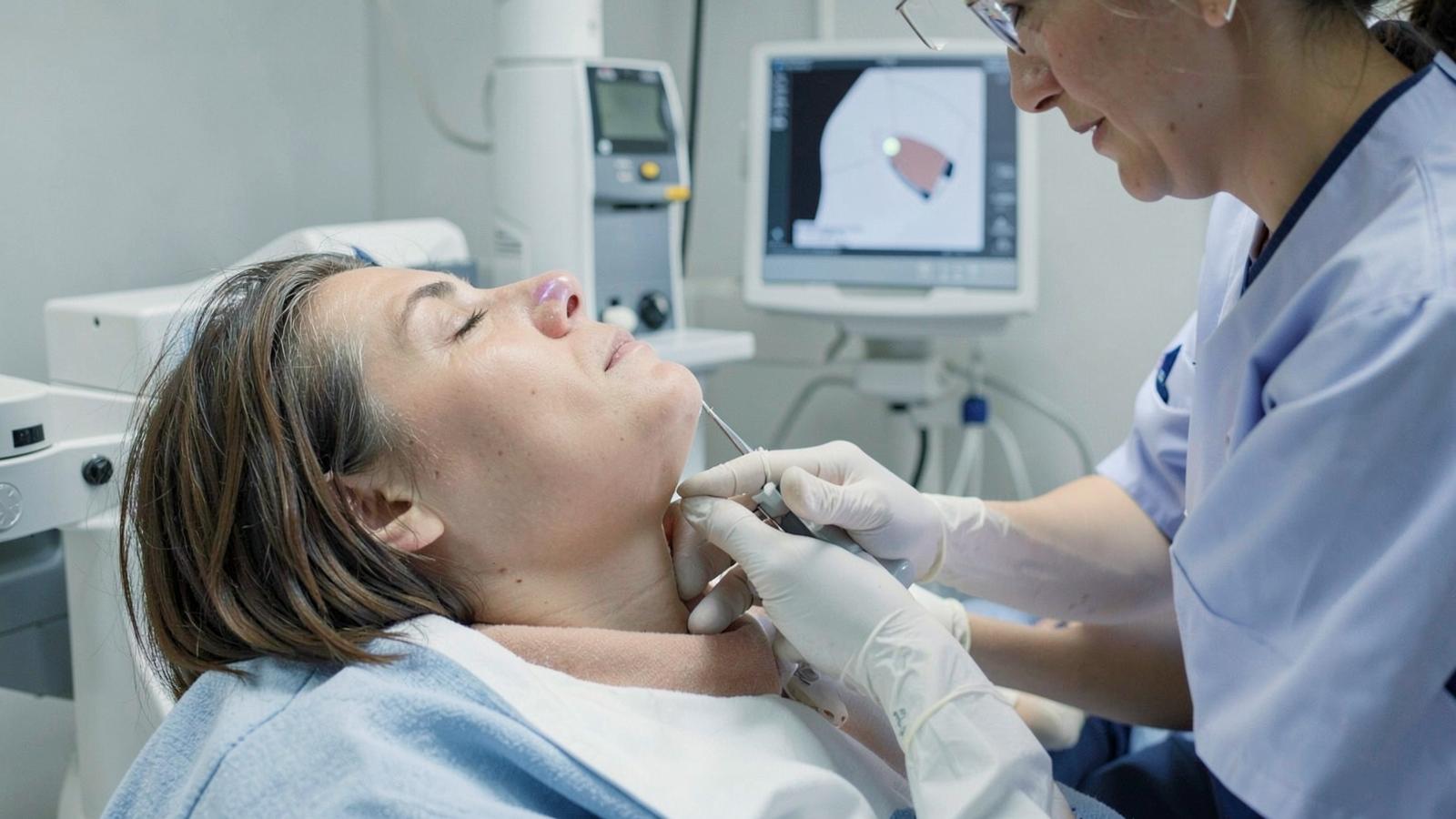
Glaucoma rarely causes symptoms early, so testing is the only reliable way to find it.
At the optician
A routine eye test usually includes eye pressure (often with an air puff), a look at or photograph of the optic nerve and, where needed, a visual field test. If anything looks suspicious, you are referred for a specialist assessment.
At a specialist assessment
Goldmann tonometry — an accurate contact pressure reading after numbing drops. Pachymetry — corneal thickness, which affects how pressure readings should be interpreted. Gonioscopy — a special lens to examine the drainage angle and tell open-angle from angle-closure disease. OCT scan — measures the nerve fibre layer around the optic nerve. Visual field test — maps peripheral vision. Dilated optic nerve examination. Allow around an hour.
Who should be tested
Everyone over 40 should have regular eye tests. In England, NHS eye tests are free for people aged 40 or over whose parent, sibling or child has glaucoma, and for anyone diagnosed with glaucoma or at risk as advised by an ophthalmologist. Higher risk also includes people of Black African or Caribbean heritage, people with high short sight and people with diabetes.
After the tests
Results lead to one of: no glaucoma; ocular hypertension or glaucoma suspect needing monitoring; or glaucoma needing treatment. See can glaucoma be cured?.
Seeing Ms Tahmina Pearsall
Ms Pearsall carries out full consultant glaucoma assessments. See glaucoma care.
Ms Tahmina Pearsall is a consultant ophthalmic surgeon who qualified in 1993 and has more than 30 years of experience and over 50,000 procedures performed. She trained at Moorfields Eye Hospital, St Thomas' Hospital and Addenbrooke's Hospital, and sees private patients at multiple clinic locations, including Harley Street in London. Read her full credentials.
Ms Pearsall sees patients at Harley Street, London and other clinic locations. Patients travel from across the UK, including Brighton & Hove and Liverpool, and from Jersey and Guernsey and the Isle of Man.
The first telephone enquiry is free — arrange a free initial call to explain what happened and check whether a review is likely to help. A full clinical consultation with Ms Pearsall costs £250. Treatment prices are listed on the pricing page and confirmed in writing after examination.
This article is general information written for patients and does not replace an individual examination.
Frequently asked questions
- How is glaucoma tested?
- By combining eye pressure measurement, corneal thickness, an optic nerve OCT scan, a visual field test, a dilated optic nerve examination and gonioscopy of the drainage angle.
- Is a glaucoma test free on the NHS?
- In England, eye tests are free for people aged 40 or over with a parent, sibling or child with glaucoma, and for people with glaucoma or at risk as advised by an ophthalmologist.
- How long does a glaucoma assessment take?
- A full specialist assessment usually takes around an hour.
Explore more on Glaucoma
Related reading
Glaucoma UK — symptoms, SLT laser & surgery- What are the benefits of early cataract surgery for glaucoma patients?
Why glaucoma patients should consider cataract surgery sooner, and how it can protect both vision and eye pressure control.
- 5 common myths about glaucoma: an expert view
A consultant ophthalmologist separates fact from fiction about glaucoma, eye pressure and sight loss.
- Being a "Glaucoma Suspect"
What it means to be labelled a glaucoma suspect, why early monitoring matters, and what tests are used to decide if treatment is needed.
- What is Glaucoma?
Glaucoma is a group of eye conditions that damage the optic nerve. Learn how it develops, who is at risk, what the symptoms are and how it is treated.
Keep reading
Have a question about your eyes?
Leave your details and the secretary will call you back. The first phone call is free; a clinical consultation is £250.
Ready to discuss your options?
Book a private consultation with Ms Tahmina Pearsall, or call our secretary directly — mention this article and we'll pull up the treatment details for you.
Prefer to read first? 10 questions to ask your cataract surgeon
Newsletter
Stay informed about your eye health
Get expert articles, clinic news and treatment updates from Dr Tahmina Pearsall — straight to your inbox.